
DTF vs DTG Printing: Which Printing Method Is Right for Your Apparel Project?
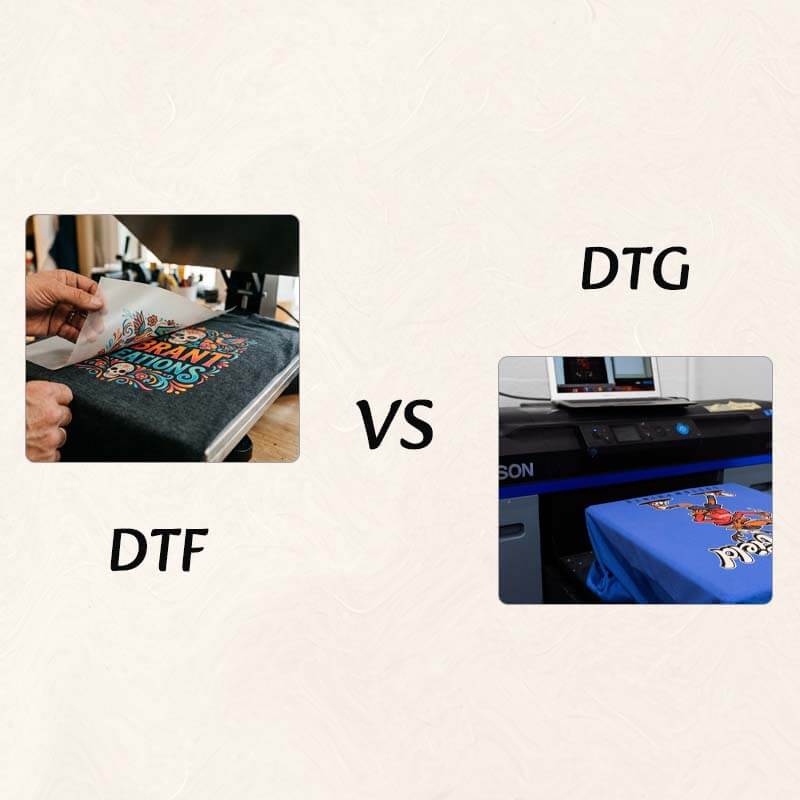
Key Takeaways
- DTF printing works on a wider range of fabrics, including cotton, polyester, and polyester blends, as well as darker garments.
- DTG printing provides a soft print feel and is especially suitable for premium cotton apparel.
- DTF usually offers more production flexibility for small batches and multiple garment types.
- DTG quality depends heavily on fabric composition, garment pretreatment, and production control.
- The best choice depends on artwork, fabric, order quantity, production goals, and future reorder plans.
Table of Contents
- What Is DTF Printing?
- What Is DTG Printing?
- DTF vs DTG Comparison Table
- Which Printing Method Costs Less?
- Which Printing Method Lasts Longer?
- Which Method Works on More Fabrics?
- Which Printing Method Looks Better?
- Which Is Better for Small Orders?
- DTF or DTG for Startup Clothing Brands
- Common Buyer Mistakes
- Manufacturer Perspective
- Final Recommendation
- FAQ
Introduction: Choosing Between DTF and DTG Printing
When developing custom apparel, choosing the right printing method affects more than just appearance. The decoration process influences production costs, fabric selection, minimum order quantities, lead times, and long-term product consistency.
DTF (Direct to Film) and DTG (Direct to Garment) are two popular digital printing technologies used for custom clothing. Both methods can produce detailed designs with multiple colors, gradients, and photographic artwork, but their production processes are different.
For clothing brands, the decision should not be based only on print quality. A suitable printing method must match the garment type, target customer, order volume, and future production plans.
What Is DTF Printing?
DTF printing, or Direct to Film printing, is a garment decoration method where artwork is first printed onto a special transfer film and then applied to fabric using heat and pressure.
Unlike traditional printing methods that require direct ink application onto the garment, DTF separates the printing process from the clothing material. This allows manufacturers to prepare designs independently and transfer them onto different types of garments.
DTF printing is commonly used for T-shirts, hoodies, sweatshirts, uniforms, sportswear, and other apparel products because it works effectively on many fabric types.
How Does DTF Printing Work?

- The artwork is prepared digitally.
- The design is printed onto a special transfer film using textile inks.
- Adhesive powder is applied to the printed film.
- The film is cured to prepare the transfer.
- The design is heat pressed onto the garment.
- The transfer film is removed, leaving the printed design on the fabric.
From a manufacturing perspective, DTF provides flexibility because the decoration process is less dependent on fabric color and material compared with some direct printing methods.
What Is DTG Printing?
DTG printing, or Direct to Garment printing, is a digital printing method where specialized ink is printed directly onto the surface of the garment.
Similar to an inkjet printer, DTG equipment applies detailed artwork directly onto fabric fibers. The garment usually requires pretreatment before printing, especially when producing designs on dark fabrics.
DTG is often selected for premium cotton apparel because the ink integrates with the fabric surface and can create a softer print feel compared with some transfer-based methods.
How Does DTG Printing Work?
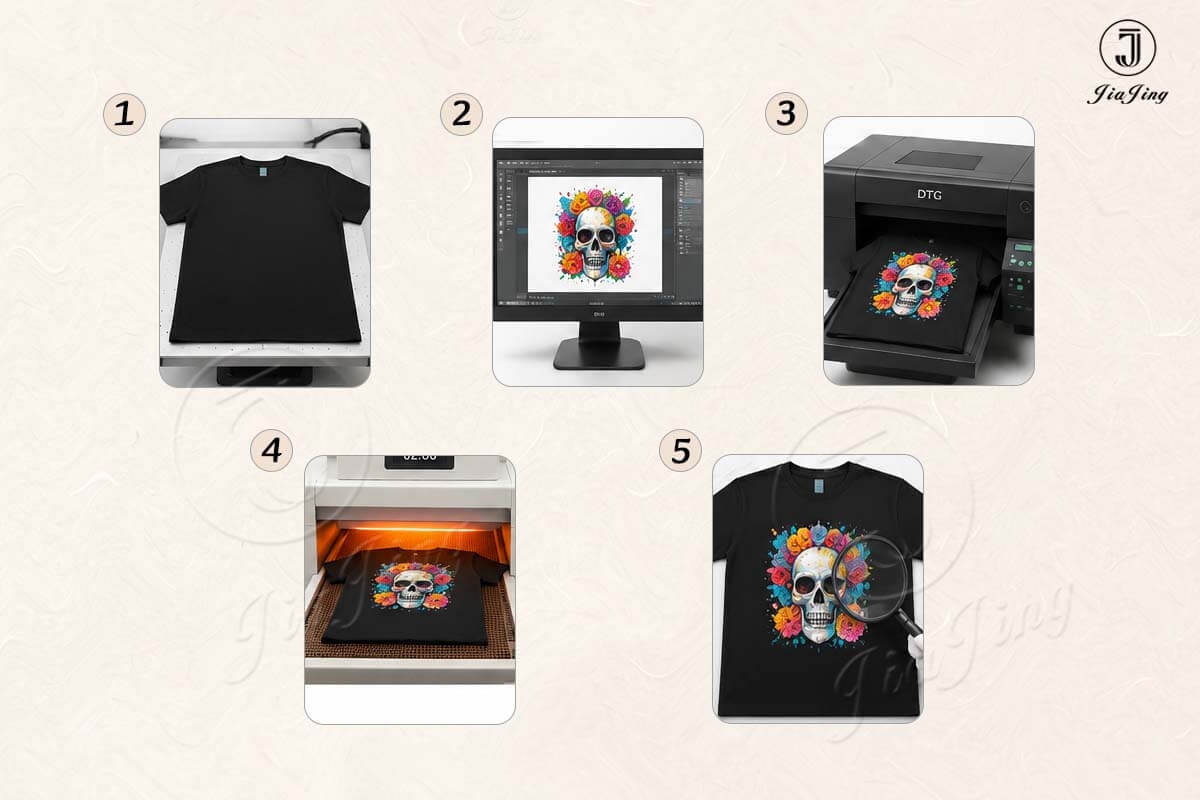
- The garment is prepared and pretreated if required.
- The artwork is loaded into the printing system.
- The printer applies ink directly onto the garment.
- The printed garment is cured with heat.
- The final product is inspected for print quality.
DTG production requires careful control of fabric composition, pretreatment quality, humidity, and curing conditions. These factors directly affect color accuracy and print durability.
DTF vs DTG Printing Comparison Table

| Factor | DTF Printing | DTG Printing |
| Printing Method | Design printed on film and transferred to garment | Ink printed directly onto fabric |
| Best Fabrics | Cotton polyester blends and various textiles | Primarily cotton and cotton-rich fabrics |
| Print Feel | Slight transfer layer on fabric surface | Soft ink integration with fabric fibers |
| Artwork | Suitable for detailed multi-color designs | Suitable for detailed photographic designs |
| Small Orders | Highly flexible for small batch production | Suitable but may require more preparation |
| Fabric Flexibility | Higher compatibility | More fabric dependent |
| Common Applications | Hoodies T-shirts uniforms sportswear | Premium cotton T-shirts fashion apparel |
Which Printing Method Costs Less?
The cost difference between DTF and DTG depends on more than the printing technology itself. Actual production cost is influenced by artwork complexity, garment type, order quantity, preparation requirements, and production efficiency.
DTF printing is often more cost-efficient for small batch apparel production because the setup process is relatively flexible. Multiple designs can be prepared without creating separate screens, making it practical for brands testing new collections or producing limited quantities.
DTG printing can also work well for small orders, especially when producing premium cotton garments with detailed artwork. However, production efficiency may be affected by garment pretreatment, drying requirements, and fabric limitations.
| Cost Factor | DTF | DTG |
| Setup Requirements | Lower preparation requirements for multiple designs | Requires garment preparation and pretreatment |
| Small Batch Production | Usually more flexible | Suitable for limited premium cotton projects |
| Multiple Garment Types | Better cost flexibility across fabrics | More dependent on fabric selection |
| Bulk Efficiency | Efficient for repeated production | More efficient |
Buyer Tip: Instead of comparing only the printing price per piece, evaluate the total production cost, including garment selection, preparation time, rejection risk, and future reorder requirements.
Which Printing Method Lasts Longer?
Both DTF and DTG can provide durable results when produced correctly. Print durability depends on ink quality, curing conditions, fabric type, washing methods, and production quality control.
DTF prints form a flexible layer on the garment surface. Modern DTF technology provides good stretch resistance and wash durability when the transfer process is properly controlled.
DTG prints absorb into the fabric fibers, which creates a softer surface feel. However, durability can vary depending on fabric composition and pretreatment quality.
| Durability Factor | DTF | DTG |
| Wash Resistance | Good when properly cured | Good when fabric and pretreatment are suitable |
| Stretch Performance | Suitable for flexible fabrics | Depends on garment structure |
| Color Retention | Strong with proper production control | Depends on fabric and ink absorption |
| Hand Feel | Slightly raised print surface | Softer fabric-integrated feel |
Quality Tip: For production orders, durability should always be evaluated through actual sample testing before bulk manufacturing. The same printing method may perform differently depending on fabric composition and garment construction.
Which Method Works on More Fabrics?
Fabric compatibility is one of the biggest differences between DTF and DTG printing.
DTF printing has broader application because the design is transferred onto the garment instead of relying on direct ink absorption into the fabric. It can be used on cotton, polyester, blends, fleece, and many other apparel materials.
DTG printing performs best on cotton and cotton-rich garments because the ink absorption process depends heavily on fabric structure.
| Fabric Type | DTF | DTG |
| 100% Cotton | Excellent | Excellent |
| Polyester | Suitable | Limited depending on application |
| Cotton Blends | Suitable | Requires careful testing |
| Fleece Hoodies | Suitable | Possible but fabric preparation is important |
| Sportswear Fabrics | Often more flexible | Requires material evaluation |
Manufacturer Insight: During product development, the garment material should be confirmed before selecting the decoration method. A printing method that works well on a cotton T-shirt may not provide the same result on polyester activewear or fleece hoodies.
Which Printing Method Looks Better?
The visual result depends on the design style and the desired product positioning rather than one method being universally better.
The visual result depends on the design style and product positioning, similar to how brands compare embroidery vs printing for apparel decoration.
DTF printing is effective for complex graphics, illustrations, logos, and designs requiring multiple colors. It is commonly chosen for streetwear, hoodies, uniforms, and products with bold artwork.
DTG printing is often preferred when brands want a softer premium feel, especially for artistic designs on high-quality cotton garments.
| Design Requirement | Recommended Method |
| Detailed colorful graphics | DTF |
| Soft premium cotton T-shirts | DTG |
| Large artwork on hoodies | DTF |
| Photography style prints | Both methods can work depending on fabric |
Which Is Better for Small Orders?
For startup brands and small batch apparel projects, DTF is often the more flexible choice because it supports different garment types and multiple designs without complicated preparation.
DTG can also be suitable for small quantities, especially when the product line focuses on premium cotton apparel with a soft hand feel.
The better option depends on the brand's product strategy. A startup producing graphic hoodies, mixed fabric products, or limited collections may benefit from DTF flexibility. A premium T-shirt brand focused on cotton basics may prefer DTG.
DTF or DTG for Startup Clothing Brands?
Startup clothing brands usually need flexibility because they are still testing designs, customer response, and product-market fit.
| Brand Situation | Recommended Choice | Reason |
| Testing multiple designs | DTF | Flexible for different graphics and garments |
| Premium cotton T-shirt brand | DTG | Soft print feel supports premium positioning |
| Streetwear hoodie collection | DTF | Works well with heavier fabrics and bold graphics |
| Mixed apparel collection | DTF | Broader fabric compatibility |
Common Buyer Mistakes When Choosing DTF or DTG
Choosing Based Only on Print Appearance
A sample print may look excellent, but production success also depends on fabric compatibility, durability requirements, and reorder consistency.
Ignoring Garment Material
The same artwork may perform differently on cotton, polyester, fleece, and blended fabrics. Fabric selection should happen before finalizing the decoration method.
Comparing Only Unit Price
The lowest printing cost does not always create the lowest total production cost. Poor compatibility or inconsistent quality can increase replacement costs and delay product launches.
Not Testing Before Bulk Production
Professional apparel production should include sample approval before bulk manufacturing. Testing allows brands to confirm color accuracy, print feel, durability, and overall appearance.
Manufacturer Perspective: How Production Teams Choose Between DTF and DTG
From a manufacturing perspective, selecting DTF or DTG is a production planning decision rather than only a printing decision.
During sample development, manufacturers evaluate several factors:
- Fabric composition and garment construction.
- Artwork complexity and color requirements.
- Expected order quantity.
- Future reorder requirements.
- Required delivery schedule.
For example, a startup brand creating a small hoodie collection may prioritize flexibility and material compatibility, making DTF a practical solution. A premium cotton T-shirt brand may prioritize a softer print experience and choose DTG instead.
A reliable manufacturing partner should help evaluate the complete product strategy instead of recommending one decoration method for every project.
Decision Matrix: Choosing Between DTF and DTG
| Requirement | Better Choice |
| Multiple fabric types | DTF |
| Premium cotton apparel | DTG |
| Small batch testing | DTF |
| Softest print feel | DTG |
| Streetwear hoodies | DTF |
| Artwork flexibility | DTF |
Final Recommendation
DTF and DTG are both valuable digital printing technologies, but they serve different production goals.
DTF is generally the more flexible option for brands producing different garment types, small batches, detailed graphics, and products requiring broader fabric compatibility.
DTG is a strong choice for premium cotton apparel where a soft print feel and direct fabric integration are important.
The right choice depends on your garment material, artwork, order quantity, and long-term production plan. Discussing these factors with an experienced apparel manufacturer can help you select the most suitable decoration method and develop a reliable private label clothing production process.
FAQ
Related Reading
- DTF Printing vs Screen Printing: Which Method Is Better?
- Types of Shirt Printing Methods for Custom Apparel
- Embroidery vs Printing: How to Choose the Right Decoration Method
- How to Choose a Custom Clothing Manufacturer for Your Brand
Embroidery vs Screen Printing: Which Is Better for Custom Apparel?
DTF vs Screen Printing: Which Printing Method Is Right for Your Apparel Project?


Launch Your Precision Manufacturing Project