
DTG vs Screen Printing: Which Is Better for Apparel?
Key Takeaways
- DTG is well suited to detailed, multicolor artwork and smaller production runs.
- Screen printing becomes increasingly efficient as order volume increases, especially for simpler graphics.
- Fabric compatibility is a major consideration because DTG performs best on suitable cotton-rich garments, while screen printing can accommodate a wider range of fabrics with the right ink system.
- For startup brands, artwork complexity and testing plans may favor DTG, while repeat bulk production often favors screen printing.
- Neither method is universally better; the right choice depends on the garment, artwork, volume, and long-term production plan.
|
Factor |
DTG |
Screen Printing |
|
Best for |
Detailed, multicolor designs |
Bold, repeat designs |
|
Small orders |
Strong fit |
Less efficient |
|
Bulk production |
Moderate |
Strong fit |
|
Artwork complexity |
Excellent flexibility |
Best for simpler graphics |
|
Fabric flexibility |
More limited |
Generally broader |
|
Setup |
Lower |
Higher |
|
Design changes |
Easy |
More setup required |
|
Typical strength |
Digital flexibility |
Production efficiency |
Table of Contents
- What Is DTG Printing?
- What Is Screen Printing?
- Which Costs Less?
- Which Lasts Longer?
- Which Looks Better?
- Which Works on More Fabrics?
- Which Is Better for Small Orders?
- Which Is Better for Bulk Production?
- DTG or Screen Printing for Startup Brands?
- Which Works Better for Different Garments?
- Which Is Better for Complex Artwork?
- How Does Production Volume Change the Decision?
- How Does Brand Positioning Affect the Choice?
- DTG vs Screen Printing: Pros and Cons
- DTG vs Screen Printing Decision Matrix
- A Manufacturer's Perspective
- Common Buyer Mistakes
- Final Recommendation
- FAQ
Introduction
Choosing between DTG and screen printing is not simply a question of which printing method produces a better-looking shirt. For apparel brands and purchasing teams, the decision affects artwork handling, garment selection, production efficiency, quality control, and the economics of both initial and repeat orders.
DTG, or direct-to-garment printing, applies digitally controlled ink directly onto a garment. Screen printing transfers ink through prepared screens, with each screen typically representing a color or print layer. The two methods therefore approach production very differently even when they are being used for similar apparel products.
For a buyer, the most useful comparison is not DTG versus screen printing in isolation. It is which process fits the specific combination of artwork, fabric, order volume, garment category, and future production plans. A broader overview of custom printing solutions can also help buyers compare decoration options before selecting a production method.
What Is DTG Printing?

DTG, or Direct-to-Garment printing, is a digital garment decoration process in which specialized inkjet equipment prints artwork directly onto a finished garment. The artwork is prepared digitally, and the printer applies ink to selected areas of the fabric.
For suitable garments, DTG can reproduce multiple colors, fine details, gradients, illustrations, and photographic-style artwork without requiring a separate physical screen for each color. Brands comparing digital printing methods may also want to understand how DTF and DTG printing differ in production use cases. This makes digital artwork preparation relatively flexible when brands need to test several designs or produce graphics with substantial visual detail.
Fabric preparation also matters. Depending on the garment color and printing system, pretreatment can be required to help the ink interact correctly with the fabric. The garment then goes through curing or heat treatment so the print can reach its intended performance.
From a manufacturing perspective, DTG is attractive when artwork changes frequently or when a project does not justify extensive setup for each design. It can also be useful during product testing when a brand wants to evaluate multiple graphics before moving successful designs into larger production.
What Is Screen Printing?

Screen printing is a stencil-based printing method in which ink is pushed through a prepared screen onto the garment. Different colors commonly require separate screens, which means artwork preparation and screen setup become part of the production process.
Although the setup process can add time and cost at the beginning of an order, screen printing becomes highly efficient when many garments use the same artwork. Once the screens are prepared and registration is established, the production team can print repeated designs at a relatively consistent pace.
Screen printing also offers flexibility across different garment materials when the ink system is selected correctly. Plastisol, water-based, discharge, and specialty inks can produce different visual and tactile results, so the printing process should be matched to the fabric and desired finish rather than treated as a single universal method.
For commercial apparel production, this repeatability is one of the main reasons screen printing remains useful for larger runs and recurring designs.
Which Costs Less?
Neither DTG nor screen printing is consistently cheaper in every order scenario. The cost structure is different, which means the more economical method can change significantly with production volume and artwork.
|
Cost Factor |
DTG |
Screen Printing |
|
Setup |
Lower |
Higher |
|
Small batches |
Often better |
Less favorable |
|
Large runs |
Less efficient |
Often better |
|
Repeat orders |
Flexible |
Highly efficient |
|
Design changes |
Easier |
More setup required |
The key point is that buyers should evaluate total production economics instead of comparing a single quoted unit price without understanding the setup. A four-color design, for example, may behave very differently from a simple one-color logo when produced with screen printing.
For a startup brand ordering several different graphics in limited quantities, DTG can sometimes provide a more practical production structure. For a proven design that will be reordered in larger quantities, screen printing can become increasingly cost-efficient because the initial setup is distributed across more garments.
Buyer Tip: Ask the manufacturer to evaluate the full artwork and order quantity together. A method that appears cheaper per print can become less attractive once setup, garment preparation, and production volume are considered.
Which Lasts Longer?
Durability depends on more than the printing method itself. Ink formulation, curing, pretreatment, garment fabric, wash conditions, print coverage, and production quality all affect how a decoration performs over time.
Screen printing has a strong reputation for durability because commercial screen printing can use robust ink systems and controlled curing processes. When the ink and garment are properly matched, and the print is correctly cured, screen printing can provide strong resistance to repeated washing and wear.
DTG can also provide durable results, particularly when the garment is suitable for the process and pretreatment, ink application, and curing are handled correctly. However, the final result can be more sensitive to fabric composition and processing conditions.
For buyers, the better question is not simply "Which lasts longer?" but "Which process can consistently deliver the durability required for this garment and use case?" A frequently washed uniform, a heavyweight streetwear hoodie, and a lightweight fashion T-shirt may require different production decisions.
Quality Tip: When evaluating a supplier, ask how the supplier controls pretreatment, curing, print consistency, and garment compatibility rather than relying only on general claims about durability.
Which Looks Better?

Appearance is highly subjective, but the two methods tend to create different visual characteristics.
DTG is particularly strong when the artwork depends on fine details, gradients, subtle color changes, illustrations, or photographic elements. Because the artwork is printed digitally, the design does not need to be reduced to a limited number of screen-based colors in the same way as a conventional screen printing setup.
Screen printing is particularly effective for bold artwork, clean color blocks, strong logos, and graphics where a distinct ink layer contributes to the intended appearance. Depending on the ink and garment, screen printing can also create a noticeable tactile or opaque finish.
Neither visual style is automatically more premium. A detailed DTG graphic may be the right choice for an artistic collection, while a simple screen-printed chest logo may be better for a structured brand identity.
Which Works on More Fabrics?
Screen printing generally offers broader fabric flexibility because the process can use different ink systems for different material requirements. This becomes especially important when a project includes custom T-shirts and hoodies made from different fabric constructions. Cotton, cotton blends, polyester, fleece, denim, and other fabrics can be screen printed when the ink and production process are correctly selected.
DTG is more fabric-dependent. Many DTG workflows perform best on cotton-rich garments, and fabric color and surface characteristics can affect how the ink behaves. Dark garments may also require pretreatment and white ink to achieve the intended result.
|
Fabric Factor |
DTG |
Screen Printing |
|
Cotton |
Strong fit |
Strong fit |
|
Polyester |
More process-sensitive |
Often more flexible |
|
Fleece |
Surface needs evaluation |
Usually adaptable with suitable ink |
|
Dark garments |
Pretreatment may be required |
Ink opacity matters |
|
Performance fabrics |
Compatibility must be checked |
Ink selection is critical |
For a multi-category apparel program, fabric compatibility should be checked before selecting the decoration process, especially when working with custom sportswear or performance fabrics. Choosing the same printing technology for every garment simply to simplify purchasing can create avoidable quality problems.
Which Is Better for Small Orders?
DTG is often a strong option for small orders because the process does not require the same physical screen preparation associated with conventional screen printing. This becomes especially useful when a brand wants to test several different graphics, produce limited quantities, or avoid committing to a large run before demand is proven.
For example, a startup brand may want to test four different illustrated T-shirt designs with a limited quantity of each. DTG can make that testing process relatively straightforward because the artwork is handled digitally rather than requiring separate screen preparation for every design.
Screen printing can still work well for small orders, particularly when the artwork is simple and the same graphic is being produced repeatedly. However, setup becomes a larger consideration when the order is small.
Decision: For limited quantities, many different designs, or artwork testing, DTG often has the more flexible production model. For a small run with one simple, repeatable graphic, screen printing may still be practical.
Which Is Better for Bulk Production?
Screen printing often has the advantage when the same design is produced in larger quantities. The initial screen setup requires work before printing begins, but once that setup is completed, the production process can become efficient for repeated garments.
DTG can also produce commercial volumes, but its digital workflow does not automatically make it the most efficient option for every large order. As volume increases, production speed, machine capacity, garment handling, curing, and repeatability become more important.
This is why a buyer should separate two questions: "Can this method produce the quantity?" and "Is this method the most efficient way to produce the quantity?" They are not the same question.
Production Scenario: A brand with one established graphic and a large repeat order may benefit from screen printing because setup is spread across many garments. A brand producing a large order with highly detailed, frequently changing graphics may still consider DTG depending on equipment capability and production planning.
DTG or Screen Printing for Startup Brands?
Startup brands usually need flexibility more than absolute production efficiency. They may be testing designs, building a first collection, or trying to learn which graphics customers actually respond to.
DTG can fit this stage because digitally prepared artwork can be changed without rebuilding physical screens for each new design. This can reduce the operational friction of testing multiple graphics in smaller quantities.
Screen printing becomes increasingly attractive when a startup brand identifies its best-selling graphics and begins placing larger repeat orders. At that stage, working with a manufacturer that supports small-batch and scalable production can make it easier to move successful designs into repeat orders. At that point, production efficiency and repeatability can matter more than the flexibility of changing designs.
The practical approach is therefore not necessarily "DTG first, screen printing later." A brand can choose one method for initial products and another for specific graphics based on volume, artwork, and garment requirements.
Buyer Tip: Think about the next two or three production cycles, not only the first order. A decoration method that works for initial sampling may not be the most efficient choice once a successful design becomes a repeat product.
Which Works Better for Different Garments?
The best decoration method can change with the garment itself. Fabric weight, surface texture, stretch, garment construction, and intended use all affect the final result.
T-Shirts
T-shirts are suitable for both DTG and screen printing. DTG can be attractive for detailed artwork, illustrations, and multicolor graphics, while screen printing is often preferable for bold logos and larger-volume repeat production.
Hoodies and Sweatshirts
Both methods can be used on hoodies and sweatshirts, but the fabric surface and garment weight should be considered. Heavy fleece can affect print appearance, and the placement area needs to be evaluated carefully. Large, bold screen-printed graphics can work well for streetwear-style hoodies, while DTG can be useful when the graphic contains fine detail or many colors.
Uniforms
For uniforms, the decision may focus more heavily on repeatability, fabric compatibility, wash performance, and logo consistency. Screen printing can be practical for standardized logos and larger repeat quantities, while the right choice depends on the uniform fabric and intended use.
Performance Apparel
Performance fabrics require closer process evaluation. Polyester blends, stretch fabrics, moisture-management finishes, and other performance characteristics can influence which ink and printing process are appropriate. Buyers should confirm compatibility with the specific garment before production rather than assuming a method will behave as it does on cotton.
Which Is Better for Complex Artwork?
DTG generally has an advantage when artwork contains many colors, gradients, fine details, illustrations, or photographic elements. Because the design is prepared digitally, there is more flexibility in reproducing complex visual information.
Screen printing can also reproduce detailed artwork, but complexity can increase preparation requirements. More colors may require additional screens, careful registration, and more production steps.
|
Artwork Type |
Better Fit |
|
Simple one-color logo |
Screen printing |
|
Bold limited-color graphic |
Screen printing |
|
Detailed illustration |
DTG |
|
Gradient artwork |
DTG |
|
Photo-style graphic |
DTG |
DTG generally has an advantage when artwork contains many colors, gradients, fine details, illustrations, or photographic elements. Screen printing can be highly effective for simple logos and bold graphics, particularly when the same design will be reproduced repeatedly.
How Does Production Volume Change the Decision?
Production volume is one of the most important factors because DTG and screen printing distribute production costs differently.
For a low-volume order, setup-related costs can have a disproportionate effect on the economics of screen printing. For a high-volume order, the same setup becomes less significant on a per-garment basis because many garments share the initial preparation.
DTG changes the calculation because the artwork can move directly from digital preparation to printing. This flexibility can be especially useful when the order contains multiple designs or when quantities per design remain relatively small.
Repeat orders require another layer of analysis. A graphic that sells consistently can create a different economic case from a new graphic that will be produced only once. Reorder frequency, artwork stability, and forecasted demand should therefore be considered along with the initial quantity.
Production Volume Perspective: Do not use MOQ alone to choose the process. Evaluate setup, repeatability, artwork changes, production speed, and expected reorder frequency together.
How Does Brand Positioning Affect the Choice?
Decoration methods also influence the way a finished garment is perceived, although the branding effect comes from the complete product rather than the printing process alone.
A graphics-focused streetwear brand may favor screen printing for bold artwork, strong ink presence, and repeatable collections. An artistic brand built around detailed illustrations may prefer DTG for certain products because it can reproduce complex artwork without heavily simplifying the design.
Premium positioning does not automatically mean DTG or screen printing. Fabric quality, pattern development, garment weight, finishing, print placement, artwork quality, and consistency across production all contribute to perceived value.
Brand Positioning Perspective: Choose the process that supports the visual language and production model of the collection rather than treating a printing method as a branding shortcut.
DTG vs Screen Printing: Pros and Cons
|
Method |
Main Strength |
Main Limitation |
|
DTG |
Artwork flexibility |
More fabric-sensitive |
|
Screen Printing |
High production efficiency |
More setup required |
The main trade-off is flexibility versus production efficiency. DTG provides greater digital artwork flexibility, while screen printing generally becomes more efficient when the same design is reproduced repeatedly.
DTG vs Screen Printing Decision Matrix
|
Project Requirement |
Better Starting Point |
|
Small quantity per design |
DTG |
|
Large repeat order |
Screen printing |
|
Detailed multicolor artwork |
DTG |
|
Simple bold graphic |
Screen printing |
|
Frequent artwork changes |
DTG |
|
Broad fabric program |
Screen printing |
|
Initial design testing |
DTG |
|
Stable best-selling design |
Screen printing |
In practice, the decision usually comes down to three variables: artwork complexity, production volume, and fabric compatibility. When artwork changes frequently, or each design is produced in smaller quantities, DTG often offers greater flexibility. When a proven design is produced repeatedly at higher volume, screen printing often provides better production efficiency.
A Manufacturer's Perspective
From a manufacturing perspective, the best printing method is usually determined during project evaluation rather than selected after the garment has already been finalized.
Artwork should first be reviewed for color count, fine detail, gradients, print size, and intended placement. The garment should then be checked for fiber composition, color, fabric surface, weight, and stretch. These factors determine which process is technically suitable before cost becomes the next consideration.
Sampling is particularly useful when the project involves a new fabric, large print area, unusual artwork, or an important color match. A structured apparel manufacturing process also helps buyers evaluate samples before moving into bulk production. A sample allows the production team and buyer to evaluate the actual print appearance on the chosen garment rather than relying only on the artwork file.
Before bulk production, quality control should verify print placement, artwork scale, color consistency, curing or fixation, and overall garment condition. For repeat orders, maintaining the same artwork specifications and production settings becomes important because buyers typically expect later batches to remain visually consistent with the approved sample.
For a commercial apparel program, production planning should therefore consider more than the first order. The most suitable method may change when a design moves from testing into repeat production, especially when order volumes increase.
Common Buyer Mistakes
Choosing Only by Unit Price
A quoted print price does not always show the complete production cost. Setup, artwork preparation, garment handling, and order quantity can materially affect the final economics.
Ignoring Fabric Compatibility
A printing method that performs well on cotton may require a different approach on polyester, fleece, nylon, or performance fabrics. Fabric should be evaluated before the process is finalized.
Comparing Methods Without Comparing Artwork
Simple logos and highly detailed illustrations create different production requirements. Treating both as identical printing jobs can lead to a misleading cost or quality comparison.
Optimizing Only for the First Order
A method that works for a small launch may not be the most efficient option for a successful repeat product. Brands should consider reorder frequency and expected volume.
Skipping a Physical Sample
Digital artwork does not always predict the exact final result on a specific fabric. Sampling is useful for checking print scale, placement, color, hand feel, and overall appearance before bulk production.
Final Recommendation
DTG is generally a strong choice for detailed artwork, multicolor graphics, design testing, and smaller quantities where digital flexibility is valuable. Screen printing is generally a stronger fit for bold artwork, repeat designs, broader fabric programs, and larger production runs where setup can be spread across many garments.
The better method is therefore the one that best matches your garment, artwork, order volume, fabric, and future production plan. For a brand with multiple product types, it can also make sense to use both methods rather than forcing every design into one production process.
If you are evaluating DTG and screen printing for a specific apparel project, discussing the artwork, garment fabric, placement, order quantity, and repeat-production plans with an experienced manufacturer can help identify the most practical approach before bulk production begins.
FAQ
Flat vs 3D Puff Embroidery: Which Is Better for Custom Apparel?
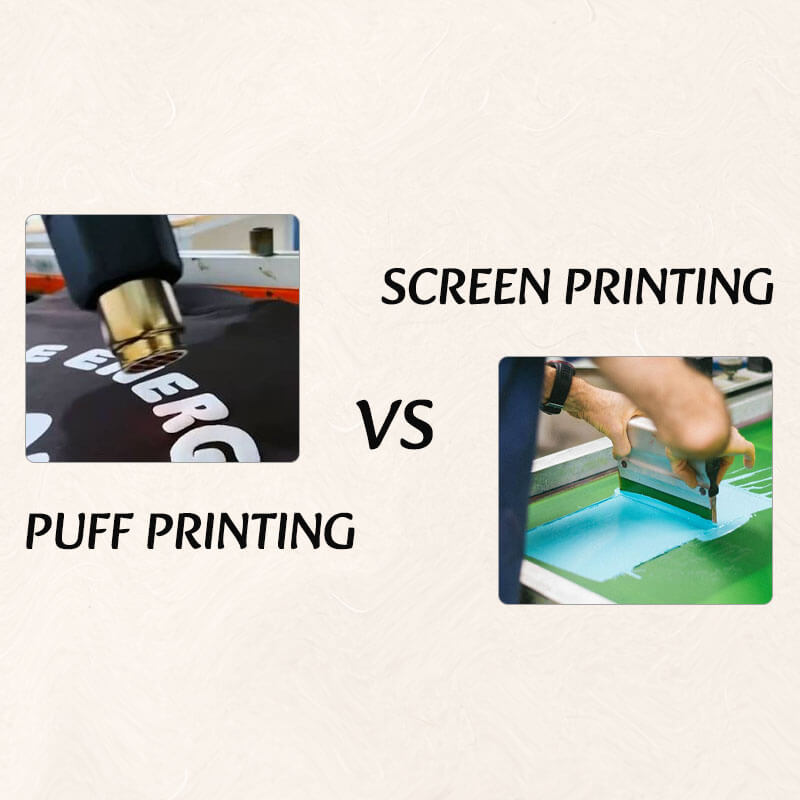
Puff Printing vs Screen Printing: Which Is Better for Apparel?



Launch Your Precision Manufacturing Project