
Puff Printing vs Screen Printing: Which Is Better for Apparel?
Key Takeaways
- Puff printing creates a raised 3D effect, while traditional screen printing produces a flat surface.
- Screen printing is generally more efficient for high-volume production with repeated designs.
- Puff printing works well for premium branding, streetwear, and small design areas such as chest logos.
- Artwork complexity, fabric type, and production quantity influence which method is more suitable.
- The best printing method depends on the final product goal rather than one method being universally better.
Table of Contents
Puff Printing vs Screen Printing Comparison Table
|
Factor |
Puff Printing |
Screen Printing |
|
Surface Effect |
Raised 3D texture with a soft dimensional appearance |
Flat printed surface with clear color coverage |
|
Best For |
Premium logos, streetwear graphics, textured designs |
T-shirts, hoodies, uniforms, promotional apparel, bulk orders |
|
Artwork Style |
Simple graphics, bold shapes, limited fine details |
Simple to complex artwork depending on printing setup |
|
Production Efficiency |
Requires additional control during printing and curing |
Highly efficient for repeated production runs |
|
Small Orders |
Suitable when design impact is more important than lowest cost |
Possible, but setup costs may affect small quantities |
|
Large Production |
Possible, but may require additional production management |
Usually preferred for high-volume manufacturing |
|
Brand Positioning |
Premium, fashion-focused, streetwear-oriented |
Versatile, commercial, and widely applicable |
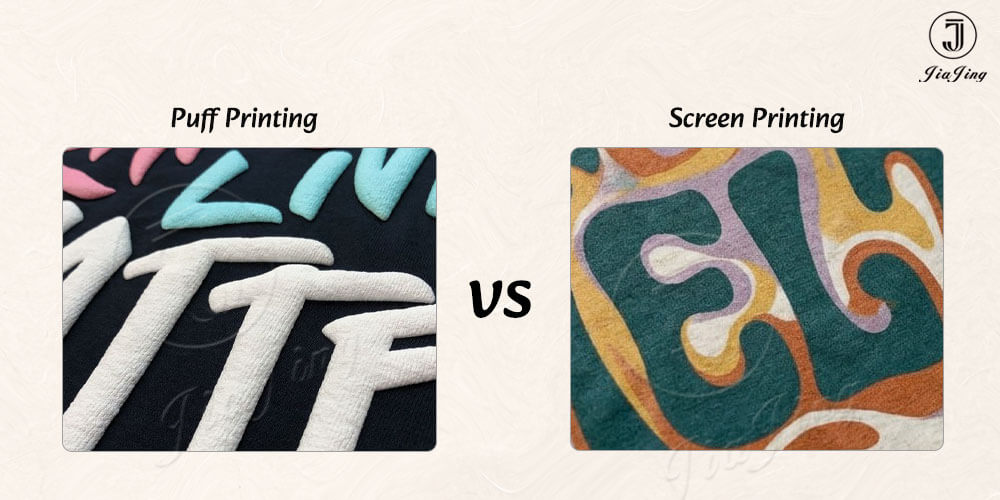
When choosing between puff printing and screen printing, apparel brands should consider more than the printing method itself. The decision should match the garment category, artwork requirements, production quantity, and expected customer experience.
What Is Puff Printing?
Puff printing is a specialty screen printing technique that creates a raised three-dimensional effect on fabric. During production, a puff additive is mixed into the printing ink. When exposed to controlled heat during curing, the additive expands and lifts the print surface above the garment.
Unlike traditional flat printing, puff printing adds texture and depth to the design. This makes it popular for brands that want their garments to feel more unique and premium, especially in streetwear, casual fashion, and limited collection products.
From a manufacturing perspective, puff printing requires careful control of ink thickness, curing temperature, and fabric compatibility. If the process is not properly controlled, the raised effect may become uneven or affect the final appearance of the garment.
Common Applications of Puff Printing
- Small chest logos on hoodies and sweatshirts
- Streetwear graphics with a dimensional appearance
- Minimalist branding elements
- Premium casual apparel collections
- Special edition or limited production garments
Buyer Tip
Puff printing creates stronger visual impact when the design relies on shape and texture rather than extremely fine details. Simple bold artwork usually produces better results than highly detailed illustrations.
What Is Screen Printing?
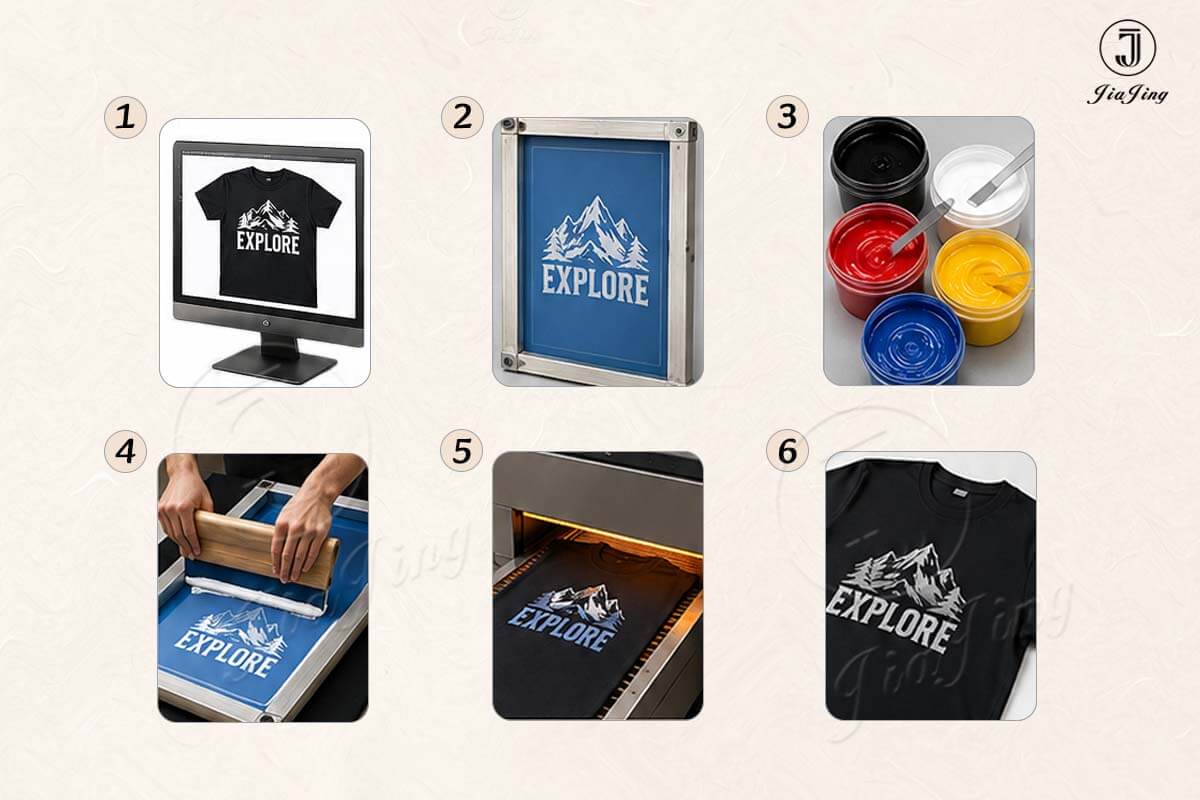
Screen printing is one of the most widely used garment decoration methods in apparel manufacturing. The process transfers ink through a prepared mesh screen onto fabric, creating a durable printed design after curing.
Screen printing is valued for its versatility, strong color coverage, and production efficiency. It can be used on many garment types, including T-shirts, hoodies, uniforms, and promotional apparel, making it one of the most widely used apparel customization techniques.
In commercial apparel production, screen printing becomes increasingly efficient as order quantity increases because the initial setup can be distributed across more garments. This makes it a common choice for brands producing larger quantities or repeat orders.
Common Applications of Screen Printing
- Large front and back graphics
- Brand logos and promotional designs
- Bulk T-shirt production
- Team uniforms and corporate apparel
- Multi-color fashion graphics
Manufacturer Insight
During bulk production, manufacturers usually evaluate screen printing based on artwork complexity, number of colors, garment fabric, and expected quantity. Proper artwork preparation and color separation can significantly affect production efficiency and print consistency.
Which Costs Less?
Screen printing is usually more cost-efficient for larger production runs, while puff printing may involve additional production considerations because it requires specialty additives and more controlled processing.
The actual cost difference depends on multiple factors, including artwork size, number of colors, garment type, order quantity, and whether the design requires special effects.
|
Cost Factor |
Puff Printing |
Screen Printing |
|
Setup |
Requires specialty ink preparation and process control |
Requires screen preparation and artwork setup |
|
Small Batch |
May be selected for higher design value |
Setup costs may have greater impact |
|
Bulk Production |
Can work but may require additional control |
Usually becomes more economical at higher volumes |
For startup brands producing limited collections, the decision is often not simply about the lowest unit cost. A higher-value visual effect may justify choosing puff printing when the goal is product differentiation.
Which Lasts Longer?
Both puff printing and screen printing can provide good durability when they are produced correctly. The final performance depends on factors such as ink formulation, curing process, garment fabric, washing conditions, and production quality control.
Screen printing generally has a longer track record in commercial apparel production because it has been widely used for decades across different garment categories. Its flat ink surface is easier to control during production, especially for large-volume orders.
Puff printing can also achieve good durability, but the raised texture requires more attention during manufacturing. Because the print surface extends above the fabric, excessive friction, improper curing, or unsuitable garment handling may affect the appearance over time.
Quality Tip
For both methods, durability should be evaluated through proper print testing, including adhesion, wash performance, and appearance inspection. A well-controlled production process is usually more important than choosing one printing method based only on the technique itself.
Which Looks Better?
The answer depends on the visual direction of the garment. Puff printing creates a textured, dimensional appearance, while screen printing provides a cleaner and more traditional printed look.
Puff printing is often selected when brands want customers to notice the texture of the design. The raised surface creates a more tactile experience, which can help simple logos or bold graphics stand out.
Screen printing provides more flexibility for detailed artwork, multiple colors, and larger graphics. It is commonly used when the design itself is the main focus rather than the texture of the print.
|
Design Requirement |
Recommended Method |
Reason |
|
Minimal logo with premium feel |
Puff Printing |
Creates a raised and distinctive appearance |
|
Large back graphic |
Screen Printing |
Provides efficient coverage and color flexibility |
|
Bold streetwear design |
Puff Printing or combination printing |
Adds texture and visual depth |
|
Detailed illustration |
Screen Printing |
Better suited for complex artwork reproduction |
Puff Printing vs Screen Printing for Artwork Complexity
Artwork characteristics are one of the most important factors when selecting between puff printing and screen printing. The printing method should match the design requirements before production begins.
Puff printing works best with designs that have clear shapes, thicker lines, and enough space for the raised effect to be visible. Extremely fine details may lose definition because the expanded ink changes the surface structure.
Screen printing provides greater flexibility for detailed graphics, especially when designs include multiple colors, gradients, or smaller visual elements.
Suitable Artwork Examples
- Puff Printing: bold logos, simple typography, oversized symbols, raised branding elements.
- Screen Printing: illustrations, detailed graphics, multi-color artwork, large printed images.
Common Buyer Mistake
A common mistake is choosing puff printing only because the 3D effect looks attractive without checking whether the artwork is suitable. A design created for flat printing may need adjustment before it can produce a clean puff effect.
Puff Printing vs Screen Printing for Logo Size and Placement
Logo size and placement also influence which printing method creates the best result. Different areas of a garment provide different visual opportunities.
|
Logo Placement |
Recommended Option |
Production Consideration |
|
Left Chest Logo |
Puff Printing |
Small raised logos can create a premium branding effect |
|
Sleeve Logo |
Puff Printing or Screen Printing |
Depends on logo size and desired texture |
|
Large Front Graphic |
Screen Printing |
Better coverage and artwork flexibility |
|
Large Back Design |
Screen Printing |
More efficient for larger print areas |

For private label and streetwear brands, a combination approach can also be considered. For example, a hoodie may use a puff-printed chest logo together with a traditional screen-printed back graphic to create different visual effects within one garment.
Which Is Better for Different Apparel Categories?
The best printing method depends partly on the garment category. Fabric thickness, garment construction, and brand expectations all influence the final result.
|
Garment Category |
Puff Printing |
Screen Printing |
|
Hoodies |
Very suitable for premium logos and streetwear styles |
Suitable for large graphics and everyday collections |
|
T-Shirts |
Suitable for fashion-focused designs |
Suitable for almost all commercial applications |
|
Sportswear |
Requires careful evaluation depending on fabric performance |
Often preferred for flexible production needs |
|
Uniforms |
Usually selected for branding accents |
Common choice for repeat bulk production |
For example, hoodie manufacturers often consider puff printing because thicker fleece fabrics can better support the raised texture. However, large hoodie graphics may still be better produced with standard screen printing because of efficiency and consistency.
Which Is Better for Small Orders?
For small production runs, the decision depends on whether the priority is cost efficiency or product differentiation.
Puff printing can be a good option for startup brands creating limited collections because a unique texture can help products stand out. However, the design should be carefully planned because specialty effects may require additional production control.
Screen printing is also suitable for small orders, especially when the design is simple and the brand plans future reorders. A supplier can help evaluate whether the initial setup investment makes sense based on the production plan.
Production Scenario
A startup streetwear brand releasing a limited hoodie collection may choose puff printing for a small chest logo because the raised effect supports premium positioning. A brand testing several graphic T-shirt designs may prefer screen printing because it allows more artwork flexibility.
Which Is Better for Bulk Production?
For bulk production, screen printing is usually the more common choice because the process is highly optimized for repeated designs and larger quantities.
Puff printing can also be produced in larger quantities, but manufacturers need additional attention during ink preparation, curing, and inspection to maintain consistent texture across all garments.
|
Production Requirement |
Recommended Choice |
|
Large quantity with repeated design |
Screen Printing |
|
Premium limited collection |
Puff Printing |
|
Multiple designs in small quantities |
Depends on artwork and product strategy |
Which Is Better for Startup Clothing Brands?
For startup clothing brands, the better choice depends on the brand concept, product strategy, and customer expectations. There is no single printing method that fits every startup.
Brands focused on premium streetwear or limited collections may prefer puff printing because the raised texture creates a stronger product experience. Brands that test different graphics or plan frequent design changes may prefer screen printing because it provides broader artwork flexibility.
|
Brand Type |
Recommended Method |
Reason |
|
Streetwear Brand |
Puff Printing |
Creates a distinctive textured appearance |
|
Startup Testing Multiple Designs |
Screen Printing |
Provides more artwork flexibility |
|
Premium Private Label Brand |
Puff Printing or Combination Printing |
Supports unique product positioning |
|
Corporate Apparel Buyer |
Screen Printing |
Efficient for consistent repeat orders |
Pros and Cons of Puff Printing and Screen Printing
|
Method |
Advantages |
Limitations |
|
Puff Printing |
|
|
|
Screen Printing |
|
|
Decision Matrix: How to Choose Between Puff Printing and Screen Printing
|
Your Priority |
Better Choice |
Why |
|
I want a premium textured logo |
Puff Printing |
The raised surface creates a stronger tactile effect |
|
I need large production efficiency |
Screen Printing |
The process is optimized for repeated production |
|
I create streetwear products |
Puff Printing |
Supports fashion-focused product differentiation |
|
I need detailed artwork |
Screen Printing |
Provides greater flexibility for complex graphics |
|
I produce hoodies with chest branding |
Puff Printing |
Thicker fabrics can support raised designs effectively |
|
I need consistent uniform production |
Screen Printing |
Suitable for standardized repeat orders |
Manufacturer Perspective: What Should Buyers Consider Before Production?
From a manufacturing perspective, choosing between puff printing and screen printing should happen before sample development rather than after artwork is finalized. The printing method affects artwork preparation, production planning, and quality inspection.
During sampling, manufacturers usually evaluate several factors:
- Whether the artwork is suitable for the selected printing technique.
- Whether the garment fabric can support the desired print effect.
- Whether the print size and placement match the product design.
- Whether production requirements can be maintained consistently during bulk manufacturing.
For example, a heavyweight hoodie with a small chest logo may be an excellent candidate for puff printing because the fabric structure supports the raised effect. A lightweight T-shirt with a large detailed illustration may be more suitable for traditional screen printing.
For brands planning future reorders, it is also important to consider whether the chosen decoration method can maintain consistency across different production batches, especially for brands planning repeat apparel production.
Common Buyer Mistakes When Choosing Printing Methods
- Choosing based only on appearance: A visually attractive technique may not always match the artwork, fabric, or production requirements.
- Ignoring production quantity: A method suitable for a small premium collection may not be the most efficient option for thousands of garments.
- Using unsuitable artwork: Highly detailed graphics may not produce the expected result with puff printing.
- Not considering garment structure: Fabric thickness and surface characteristics influence the final print quality.
- Focusing only on unit cost: The best choice should consider product value, customer expectations, and long-term brand positioning.
Final Recommendation: Puff Printing or Screen Printing?
Puff printing is a strong choice when a brand wants a raised, premium, and noticeable design effect, especially for streetwear, hoodies, and smaller branding elements. Screen printing remains one of the most practical options for versatile apparel production, detailed graphics, and larger production volumes.
The right decision depends on your artwork, garment category, order quantity, and brand positioning. For many apparel projects, the best solution is not choosing one method universally but selecting the decoration technique that matches the product goal.
If you are planning a custom apparel project, discussing your artwork, garment type, and production requirements with an experienced clothing manufacturer can help determine the most suitable printing solution.
FAQ
DTG vs Screen Printing: Which Is Better for Apparel?
Plastisol vs Water-Based Ink: Which Is Better for Apparel Printing?


Launch Your Precision Manufacturing Project