
Patch vs Direct Embroidery: Which Is Better for Clothing Brands?
Key Takeaways
- Direct embroidery stitches a design directly onto the garment, while a patch is made separately and then attached.
- Patches can be more suitable for complex shapes, larger graphics, or designs that need a defined border.
- Direct embroidery often suits small logos on stable fabrics, but lightweight or highly stretchy fabrics require extra care.
- Neither method is always cheaper. Artwork complexity, stitch count, patch construction, attachment, and order quantity affect the total cost.
- Approve decoration on a sample made with the intended fabric before confirming bulk production.
Patch vs Embroidery: Quick Comparison
|
Factor |
Direct Embroidery |
Patch |
|
How it is made |
Stitches are sewn directly onto the garment |
The design is produced separately and attached to the garment |
|
Appearance |
Integrated stitched finish |
Defined edge or separate decorative layer |
|
Suitability |
Small to medium designs with details that can be stitched clearly |
Benefit from a border, layered construction, or a distinct shape |
|
Design changes |
Artwork and digitizing may need adjustment for each design |
Patch dimensions, backing, and attachment method need to be specified |
|
Cost factors |
Stitch count, density, size, setup, and production quantity |
Patch material, construction, edge finish, attachment, and quantity |
|
Applications |
Small chest logos, sleeve logos, and garment branding |
Statement logos, badges, shaped artwork |
Table of Contents
- What Is the Difference Between Patches and Embroidery?
- When Should You Choose Direct Embroidery?
- When Should You Choose Patches?
- Which Looks Better?
- Which Is More Durable?
- Which Costs Less?
- Which Method Works Best for Different Garments?
- How Should Clothing Brands Make the Final Decision?
- What Mistakes Should Buyers Avoid?
- Frequently Asked Questions
What Is the Difference Between Patches and Embroidery?
Direct embroidery stitches a design into the garment itself. A patch is produced separately, then sewn, heat-applied, or attached using another suitable method. Embroidery can also be used to make a patch, so the key distinction is not whether the design contains stitches. It is whether those stitches are applied directly to the garment or to a separate piece that is attached afterward.
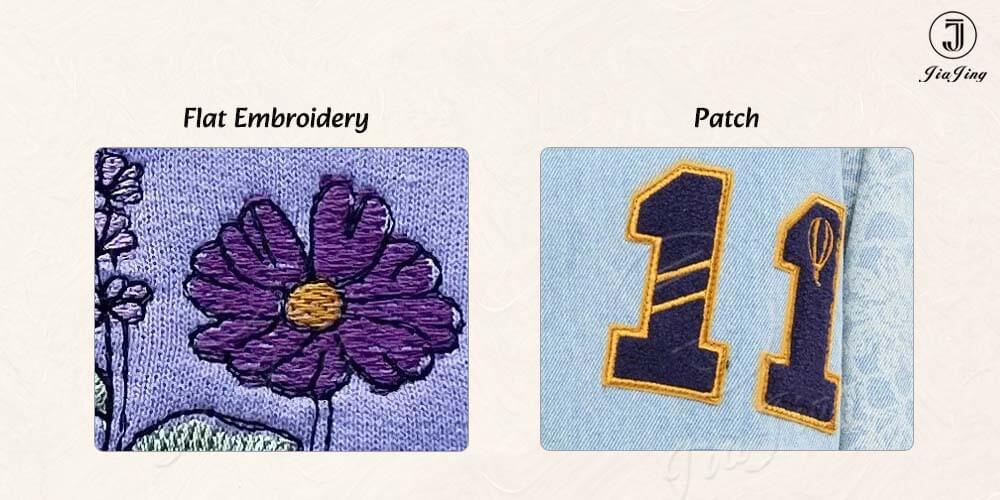
Direct Embroidery
Direct embroidery is often chosen when a brand wants a logo to feel like part of the garment. The stitching adds texture and dimension, making it suitable for many small chest logos, sleeve details, and other compact branding elements. The final result depends on the artwork, stitch density, thread, backing, fabric construction, and placement.
Patches
Patches are separate components that can be made with embroidery, printing, woven construction, or a combination of techniques. They can create a defined border, support a distinctive shape, or separate a detailed design from the garment fabric. The patch must still be matched to the garment and attached appropriately; a patch does not automatically solve every fabric or durability issue.
When Should You Choose Direct Embroidery?
Direct embroidery is a good starting point when the design is relatively compact, the fabric can support the stitching, and the brand wants a stitched logo that sits directly on the garment.
A Clean, Integrated Brand Logo
Direct embroidery works well for many small chest logos, sleeve marks, and simple brand symbols. It avoids a separate patch edge and can create a neat, integrated finish when the fabric and embroidery settings are suitable.
Simple Artwork and Readable Lettering
Logos with clear shapes and lettering that remains legible at the finished size are usually easier to embroider successfully. Very small text, thin lines, tight spacing, and intricate details may need to be simplified because thread has physical thickness and cannot reproduce every detail in the same way as a printed image.
Suitable, Stable Fabrics
Fabric stability matters because embroidery stitches pull on the material. A stable fabric is generally easier to embroider without puckering or distorting the surrounding area. Lightweight knits and highly stretchy fabrics need more careful evaluation before direct embroidery is approved.
Fabric Weight and Stretch: A Practical Screening Rule
Based on our past production experience, we generally avoid recommending direct embroidery as the first option for the following fabric combinations:
- Hoodies and sweatpants: French terry below 250 GSM, or highly stretchy fabric with more than 5% spandex (elastane).
- T-shirts: lightweight single jersey below 160 GSM, or high-stretch performance T-shirt fabric with more than 8% spandex (elastane).
These are preliminary screening guidelines, not universal technical limits. Fabric construction, knit stability, embroidery size, stitch density, backing, and placement can all affect the result. When the fabric is lightweight or highly elastic, the needle and thread tension may pull the knit out of shape. The embroidered area may pucker, look raised or uneven, or distort the surrounding fabric. If the fabric and embroidery settings are not compatible, washing may make the problem more noticeable.
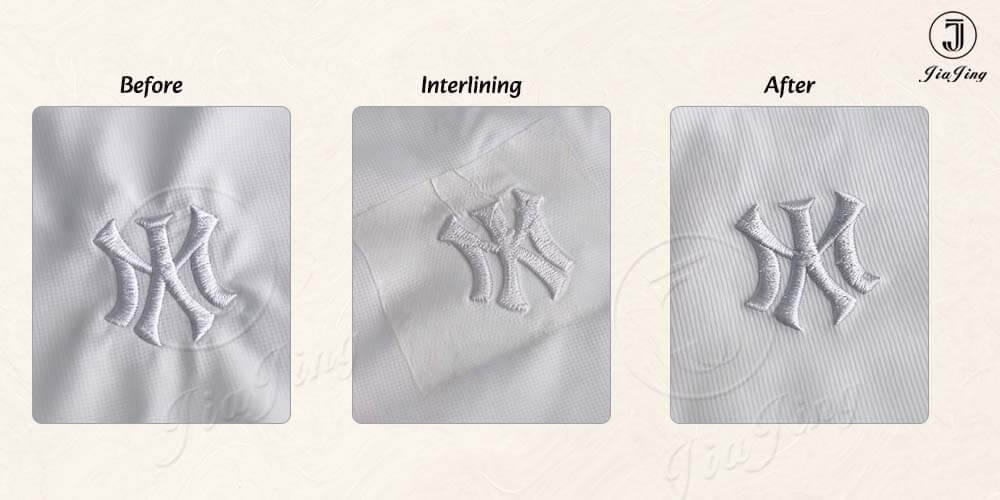
If you want to embroider on elastic fabric, consider using a lining for enhancement. The final approach should be determined based on the specific fabric and design, and samples must be tested before proceeding to mass production.
Before approving direct embroidery, check the finished logo size, stitch density, fabric behavior, backing, and placement on a sample made with the intended production material. For brands developing custom hoodies and sweatshirts, this is especially important when the design is placed on a soft, stretchy, or lightweight area.
When Should You Choose Patches?
Patches are worth considering when the design needs a defined edge, when the artwork is better suited to a separate component, or when direct embroidery may put too much stress on the garment fabric.
Artwork With a Distinct Border or Shape
A patch can give a logo a clear outline and make it visually separate from the garment. This is useful for badges, shaped graphics, lettering with a border, and designs that need a more pronounced decorative element.
Detailed or Layered Designs
Depending on the patch construction, a separate patch may accommodate visual details, color combinations, or layered elements that would be difficult to reproduce directly with embroidery. The right construction depends on how much detail needs to be preserved and the texture the brand wants.
When the Garment Fabric Needs Extra Care
A patch can move some of the decorative work away from a delicate or stretchy garment surface. However, the patch still adds weight and stiffness, and its attachment method can affect comfort, drape, and durability. A patch on lightweight jersey, for example, may pull on the garment or feel too rigid if it is too large or heavy.
When the Patch Itself Is Part of the Design
Sometimes the separate border, raised surface, or badge-like appearance is an intentional part of the design. In that case, a patch is not merely an alternative to direct embroidery; it is a design feature in its own right.
Which Looks Better: Patches or Direct Embroidery?
Neither method looks better in every situation. Direct embroidery stitches a design onto the garment, while a patch creates a separate decorative area. The right choice depends on the intended visual effect.
- Choose direct embroidery -- when you want a compact logo with a stitched finish that blends into the garment's overall design.
- Choose a patch -- when you want a distinct border, a badge-like appearance, or a clearly separated graphic.
- Compare samples -- when the design contains small text, fine lines, multiple colors, or a large decorative area.
A mockup can help confirm the intended size and placement, but it cannot fully show how stitches or a patch will affect the fabric. The physical sample is the more reliable way to judge the finished result.
Which Is More Durable?
Both direct embroidery and patches can be durable when they are made and applied correctly. Their durability depends on the materials, construction, attachment method, garment use, and care instructions.
With direct embroidery, the main concerns include thread quality, stitch construction, fabric distortion, and whether the embroidered area is suitable for repeated stretching and washing. With patches, buyers should also consider edge fraying, attachment strength, adhesive performance where applicable, and whether the patch lifts or curls during use.
Before bulk production, check the decorated sample for loose threads, puckering, uneven edges, lifting, and distortion. If the garment will be washed frequently or used for active movement, test the sample under the intended care conditions instead of assuming one method will always last longer.
Which Costs Less: Patches or Direct Embroidery?
Neither option is automatically cheaper. Direct embroidery costs are affected by the design size, stitch count, stitch density, digitizing or setup requirements, and order quantity. Patch costs depend on the patch material and construction, dimensions, border, backing, attachment method, and production quantity.
A small, simple logo may be economical to embroider directly. A more complicated design may be better suited to a patch, depending on how it is constructed. On the other hand, producing and attaching a patch adds steps and materials that may increase the total cost.
When comparing quotations, ask for the complete decorated-garment cost rather than comparing the embroidery price with the patch price alone. The quotation should reflect the actual artwork, fabric, placement, attachment method, and order quantity. A suitable custom clothing manufacturing service should review the decoration method alongside the garment requirements, so the chosen finish supports the design without adding unnecessary cost.
Which Method Works Best for Different Garments?
Hoodies and Sweatshirts
Direct embroidery is often suitable for compact chest or sleeve logos on stable, medium- to heavyweight fabrics. A patch may be a better option when the design needs a defined border, a larger badge-like graphic, or a separate decorative layer. Lightweight French terry and highly stretchy fabrics should be evaluated carefully before direct embroidery is selected.
T-Shirts
Creating embroidered T-shirts requires special care, as lightweight knit fabrics are prone to distortion under dense stitching. Small logos may work well on suitable fabrics, but thin single jersey or high-stretch performance fabric may require a different decoration approach. A patch should also be checked for weight, stiffness, and how it affects the drape of the shirt.
Jackets
Many jackets can support direct embroidery, patches, or a combination of both, but the shell fabric and construction still matter. A patch may work well for a badge or a design with a clear border, while direct embroidery may suit a smaller logo. For lined, coated, padded, or technical fabrics, confirm the attachment method and any backing requirements before approving production.

The same decoration method can produce different results on different fabrics. A dense embroidered logo may work well on a stable, heavyweight sweatshirt but cause puckering on a lightweight T-shirt. Reviewing the artwork, fabric, placement, and production cost together helps determine whether direct embroidery, a patch, or another decoration method will deliver the intended look without adding unnecessary cost.
How Should Clothing Brands Make the Final Decision?
Use the following decision matrix as a starting point. It helps narrow the options, but the final choice should still be checked against the actual garment and artwork.
|
Project Requirement |
Better Choice |
What to Check |
|
Small logo on stable fabric |
Direct embroidery |
Lettering size, stitch density, placement |
|
Design with a distinct border |
Patch |
Patch edge, dimensions, attachment |
|
Lightweight or highly stretchy fabric |
Compare a patch and other suitable methods |
Fabric distortion, weight, drape, and recovery |
|
Intricate artwork or small text |
Review the artwork before choosing |
Whether the detail can be reproduced clearly |
|
Large decorative graphic |
Direct embroidery or printed service
|
Weight, flexibility, comfort, and cost |
|
Repeated bulk orders |
Compare the complete production cost |
Setup, attachment steps, consistency, and reorder specifications |
Before confirming the method, provide the manufacturer with the artwork, target dimensions, garment style, fabric details, placement, expected order quantity, and the appearance you want to achieve. If the logo is still being developed, ask for advice on whether the artwork needs to be simplified or adjusted for the chosen process.
For a project that needs embroidered branding, a suitable custom embroidery service should consider fabric stability, stitch density, logo size, and placement—not just whether the artwork can technically be stitched.
What Mistakes Should Buyers Avoid?
- Choosing from a digital mockup alone -- A screen image cannot show the actual stiffness, texture, puckering, or drape of the decorated garment.
- Ignoring fabric weight and stretch -- A method that works on a stable sweatshirt may not work equally well on thin jersey or highly elastic fabric.
- Making the logo too small -- Fine lettering and narrow gaps may become unclear when translated into stitches or patch construction.
- Comparing only the decoration unit price -- Consider materials, setup, attachment, sampling, and the total finished-garment cost.
- Skipping sample approval -- Confirm the decoration on the intended fabric before authorizing bulk production.
- Failing to record approved specifications -- Keep the final artwork, size, placement, method, and sample approval details for repeat orders.
Frequently Asked Questions
Final Recommendation
For clothing brands, the decision between patches and direct embroidery should start with the artwork and the fabric—not with a blanket rule about which method is better. Direct embroidery is a strong option for compact logos on suitable, stable fabrics. Patches are worth considering for designs that need a defined border, a separate decorative layer, or an alternative to stitching directly into a delicate area.
Share the artwork, garment style, fabric details, target placement, and order quantity with your manufacturer. Review those details together and approve a physical sample to confirm appearance, suitability, and cost before bulk production.
Flat vs 3D Puff Embroidery: Which Is Better for Custom Apparel?


Launch Your Precision Manufacturing Project