
Types of Shirt Printing: 8 Printing Methods Explained
Introduction
There are many types of shirt printing available today, but only a few are suitable for professional apparel production. The best printing method depends on your fabric choice, artwork complexity, order quantity, budget, and durability requirements.
The most common types of shirt printing include screen printing, DTF printing, DTG printing, heat transfer printing, sublimation printing, puff printing, discharge printing, and plastisol printing.
- Screen printing is typically the best choice for bulk apparel production.
- DTF offers flexibility for low-MOQ orders, and DTG excels at detailed artwork.
- Sublimation remains the preferred solution for polyester sportswear.
If you're comparing different printing methods for shirts, this guide explains how each technology works, its advantages and limitations, typical production scenarios, and how to choose the right option for your next apparel collection. Choosing the right printing method can significantly impact production cost, lead time, and product quality.
Table of Contents
- What Are the Main Types of Shirt Printing?
- Screen Printing
- DTF Printing
- DTG Printing
- Heat Transfer Printing
- Sublimation Printing
- Specialty Shirt Printing Methods
- Which Shirt Printing Method Lasts the Longest?
- Cost Comparison of Different Shirt Printing Methods
- How to Choose the Best Shirt Printing Method
- Buyer Checklist Before Placing a Shirt Printing Order
- FAQ
What Are the Main Types of Shirt Printing?
Modern apparel manufacturing uses several printing technologies, each designed for different production goals. Some methods prioritize durability and cost efficiency, while others focus on color complexity, customization, or specialty visual effects.
The most common types of shirt printing include:
- Screen Printing
- DTF (Direct-to-Film) Printing
- DTG (Direct-to-Garment) Printing
- Heat Transfer Printing
- Sublimation Printing
- Puff Printing
- Discharge Printing
- Plastisol Printing

Each method serves a different purpose. Understanding these custom shirt printing methods can help buyers reduce production costs, improve product quality, and avoid selecting a decoration technique that does not match their business goals.
Quick Comparison of Shirt Printing Methods
| Printing Method | Best For | MOQ Suitability | Fabric Compatibility | Durability |
| Screen Printing | Bulk Production | Medium-High | Cotton, Blends | Excellent |
| DTF Printing | Small Batches | Low | Most Fabrics | High |
| DTG Printing | Photo Artwork | Low | Cotton | Medium-High |
| Heat Transfer | Short Runs | Very Low | Most Fabrics | Medium |
| Sublimation | Sportswear | Low-Medium | Polyester | Excellent |
| Puff Printing | Fashion Branding | Medium | Cotton, Blends | High |
Before choosing a printing method, buyers should evaluate:
- Expected order volume
- Target retail price
- Artwork complexity
- Fabric composition
- Required durability
- Future reorder potential
These factors often have a greater impact on production success than the printing technology itself.
Screen Printing: The Most Popular Shirt Printing Method

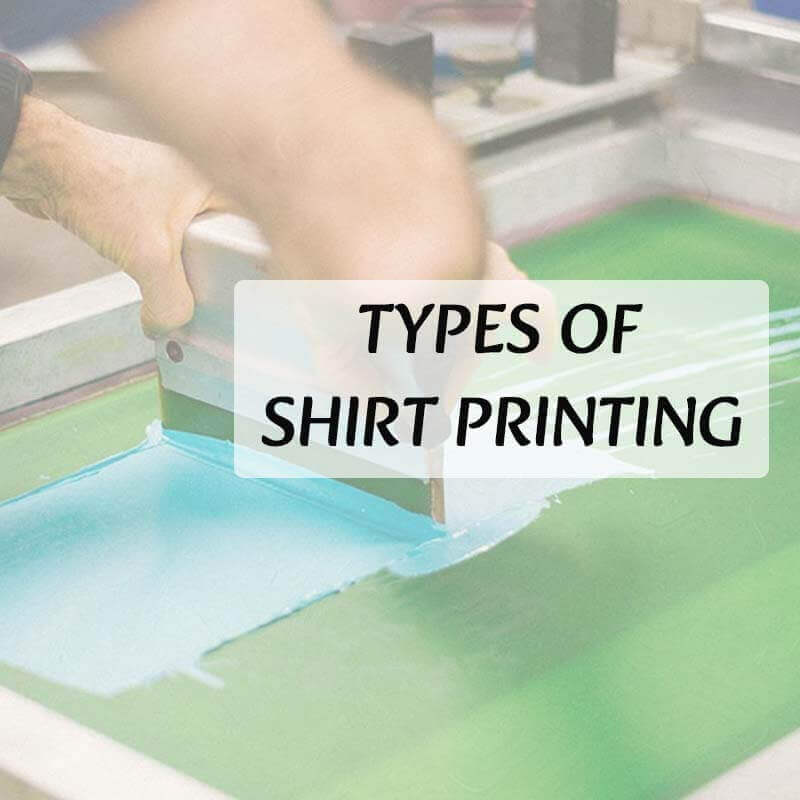
Screen printing uses mesh screens to push ink onto fabric. Each color requires its own screen, and layers are applied separately to build the final design.
Although setup takes longer than digital printing methods, the process becomes highly efficient during mass production.
Screen printing has remained the industry standard because it offers an excellent balance of durability, color vibrancy, scalability, and production efficiency.
- Strong color opacity
- Excellent wash resistance
- Low unit cost at higher volumes
- Suitable for retail-quality apparel
- Wide range of specialty ink options
Many of the screen prints for t-shirts sold by established fashion brands are produced using plastisol, water-based, or discharge screen printing techniques.
When Screen Printing Is the Best Choice
Screen printing performs best when artwork remains consistent across a larger production run.
Typical production scenarios include:
- Brand merchandise collections
- Corporate uniforms
- Event apparel
- Retail fashion products
- School and university apparel
If a brand's graphic design uses two colors or fewer and the order quantity exceeds 50 garments, screen printing is the ideal choice; furthermore, the larger the order, the lower the proportion of screen-making costs, resulting in greater savings on the overall cost of the garments.
Manufacturing Insight
From a manufacturer's perspective, screen printing delivers the strongest economies of scale among all major apparel printing methods. During bulk manufacturing, screens are prepared once and then used repeatedly throughout production. This significantly reduces labor costs per garment.
One common mistake we often see is brands choosing DTF or DTG for designs that will likely become long-term bestsellers. If a design is expected to be reordered regularly, screen printing typically becomes more economical over multiple production cycles.
Before bulk production begins, buyers should evaluate not only the initial order quantity but also potential reorder frequency. This simple decision can dramatically affect long-term printing costs.
Advantages and Limitations
| Advantages | Limitations |
| Excellent durability | Higher setup costs |
| Cost-effective for bulk orders | Less suitable for small quantities |
| Vibrant colors | Each color requires a separate screen |
| Supports specialty inks | Longer setup process |
For most established clothing brands, screen printing remains the benchmark against which other custom shirt printing methods are compared.
DTF Printing: The Fastest-Growing Custom Shirt Printing Method
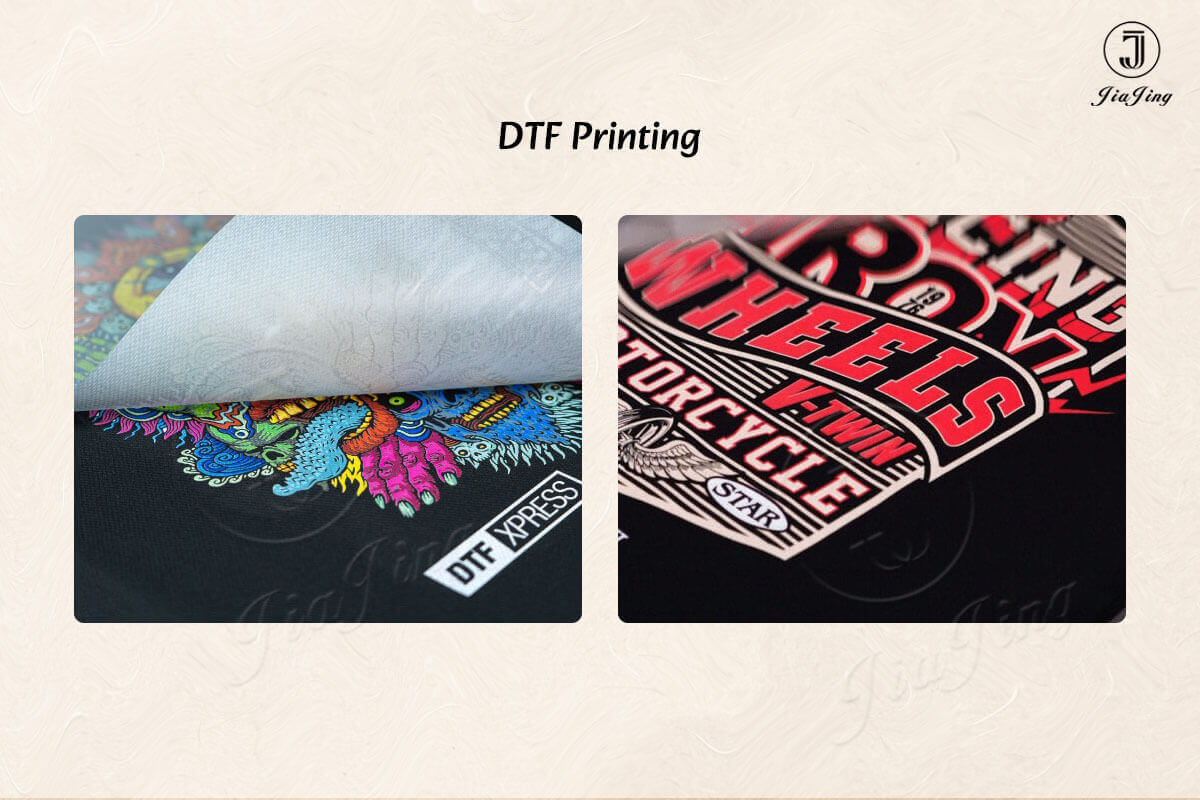
DTF (Direct-to-Film) printing transfers artwork onto a special film before applying it to garments using heat and pressure.
Unlike screen printing, DTF does not require separate screens for each color. Complex graphics can be printed directly from digital files, making it highly attractive for modern apparel brands.
DTF printing solves many of the limitations associated with low-volume production.
- No screen setup required
- Unlimited color combinations
- Works on cotton and polyester
- Supports detailed artwork
- Suitable for low MOQ orders
For brands launching multiple design variations, DTF can significantly reduce development costs.
Manufacturing Insight
In actual production, DTF is often chosen because of its flexibility rather than its absolute cost. During sample development and low-MOQ manufacturing, buyers frequently revise artwork, sizing, or colorways. DTF allows these changes without requiring new screens or significant setup expenses.
When working with startup brands, we often recommend DTF during validation stages and screen printing after successful product-market fit has been established.
This phased approach can help balance speed, flexibility, and profitability.
Explore Our Custom Printing Services
DTF vs Screen Printing
DTG Printing: Best for Highly Detailed Artwork and Small Orders

How DTG Printing Works
DTG (Direct-to-Garment) printing uses specialized digital printers to apply water-based inks directly onto fabric. The process works similarly to an inkjet printer, except the artwork is printed directly onto the garment.
Because designs are created digitally, DTG can reproduce highly detailed graphics, gradients, and photographic images that would be difficult or costly to achieve through traditional screen printing.
When DTG Printing Is the Best Choice
DTG is most effective for low-volume production where artwork contains many colors, gradients, or photo-realistic elements.
Common applications include:
- Brand samples
- Print-on-demand products
- Artist merchandise
- Limited edition collections
- Photography-based designs
For example, a designer launching a capsule collection featuring detailed artwork may choose DTG because it allows unlimited colors without screen setup costs.
Manufacturing Insight
During sample development, DTG is frequently used because it provides an accurate visual representation of the final artwork. This allows buyers to approve graphic placement, color appearance, and design proportions before committing to bulk production.
However, one mistake we often see is treating DTG as a replacement for screen printing in large production runs. While DTG excels at design flexibility, production throughput is significantly slower than screen printing. For orders exceeding several hundred pieces, lead times and production costs can increase rapidly.
Buyers should evaluate both artwork complexity and projected order volume before selecting DTG as their primary production method.
Advantages and Limitations
| Advantages | Limitations |
| Photo-quality printing | Slower production speed |
| No screen setup | Less efficient for large orders |
| Unlimited colors | Best on cotton fabrics |
| Ideal for samples | Higher unit costs at scale |
For brands producing highly detailed artwork in small quantities, DTG remains one of the most versatile custom shirt printing methods available today.
DTF vs DTG Printing
Heat Transfer Printing: Flexible for Short Runs and Promotional Apparel
How Heat Transfer Printing Works
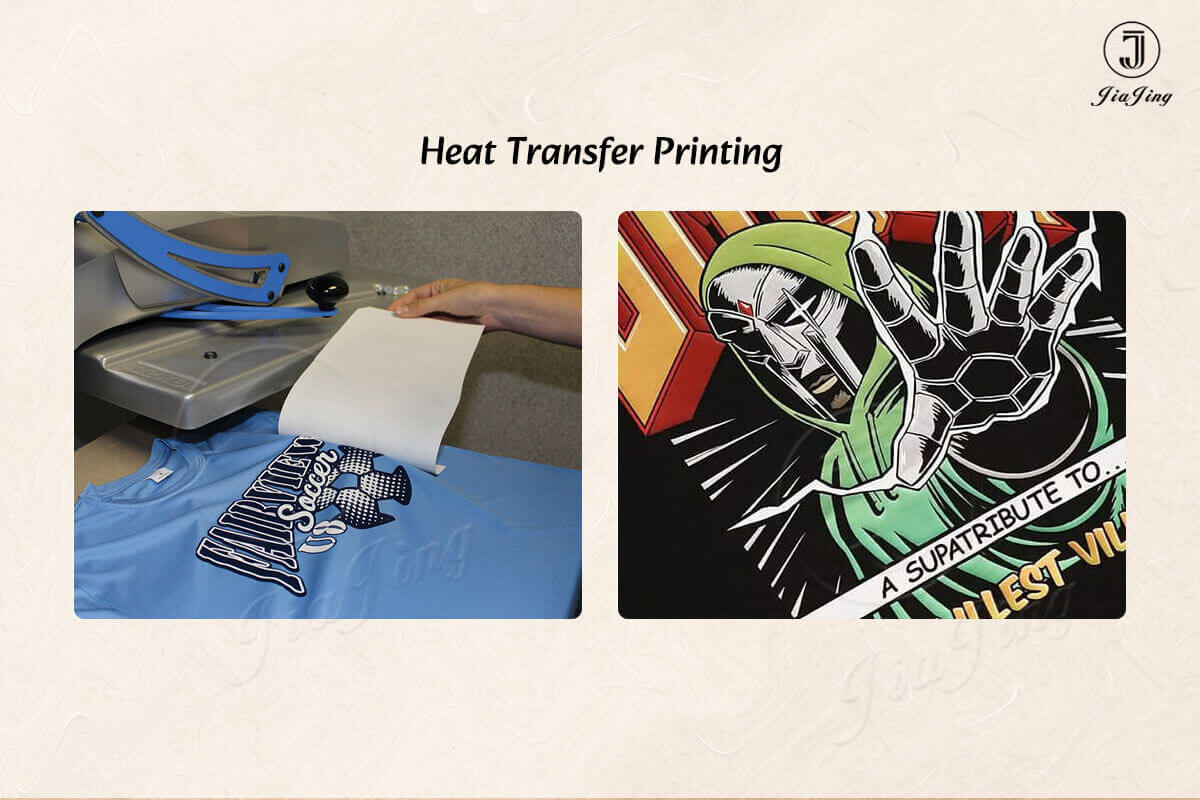
Heat transfer printing involves applying a printed design onto fabric using heat and pressure. The design may be produced through digital printing, vinyl cutting, or transfer paper technologies.
Once transferred, the artwork adheres to the garment surface, creating a finished graphic without the need for screens.
Best Applications for Heat Transfer Printing
Heat transfer printing is commonly used for:
- Short production runs
- Event apparel
- Promotional garments
- Sports numbering
- Personalized products
Because setup requirements are minimal, this method is often selected for projects requiring rapid turnaround.
Manufacturing Insight
In actual production, heat transfer printing is often selected because it solves customization challenges rather than cost challenges. Variable data such as names, numbers, and individual graphics can be applied efficiently without altering the core production process.
However, buyers should understand that transfer-based graphics typically sit on top of the fabric surface. Depending on the transfer material, long-term durability may not match screen printing or sublimation.
When durability is a top priority, requesting wash-test samples before placing a bulk order is strongly recommended.
Advantages and Limitations
| Advantages | Limitations |
| Fast setup | Can crack over time |
| Supports personalization | Less breathable |
| Good for short runs | May feel heavier on the fabric |
| Low MOQ | Lower durability than screen printing |
Sublimation Printing: The Preferred Method for Sportswear

Sublimation printing uses heat to convert dye into a gas, allowing it to bond directly with polyester fibers.
Unlike other printing methods that place graphics on the fabric surface, sublimation becomes part of the fabric itself.
This results in a lightweight feel, excellent stretch performance, and outstanding durability.
Why Sublimation Dominates Sportswear Manufacturing
Sublimation is widely used in activewear because performance garments often require lightweight construction and unrestricted movement.
- No cracking
- No peeling
- No heavy ink layers
- Excellent breathability
- Unlimited color capability
For sports teams, running apparel brands, cycling collections, and fitness products, sublimation often provides the best balance between performance and appearance.
Manufacturing Insight
Before bulk production begins, fabric composition should always be verified. Sublimation works best on garments containing high polyester content, typically 90% polyester or higher.
One mistake we often see is buyers attempting to use sublimation on cotton garments. Because sublimation dyes bond with polyester fibers rather than cotton fibers, print quality and durability can be severely compromised.
When sourcing performance apparel, buyers should discuss both fabric composition and printing requirements during the development stage to avoid production issues later.
Advantages and Limitations
| Advantages | Limitations |
| Exceptional durability | Requires polyester fabric |
| No cracking or peeling | Not suitable for most cotton garments |
| Lightweight feel | Works best on light-colored fabrics |
| Full-color printing | Limited fabric compatibility |
Specialty Shirt Printing Methods for Fashion Brands
Beyond standard production methods, many fashion brands use specialty printing techniques to create unique visual effects and increase perceived product value.
These techniques are often combined with screen printing to enhance texture, depth, and brand identity.
Puff Printing
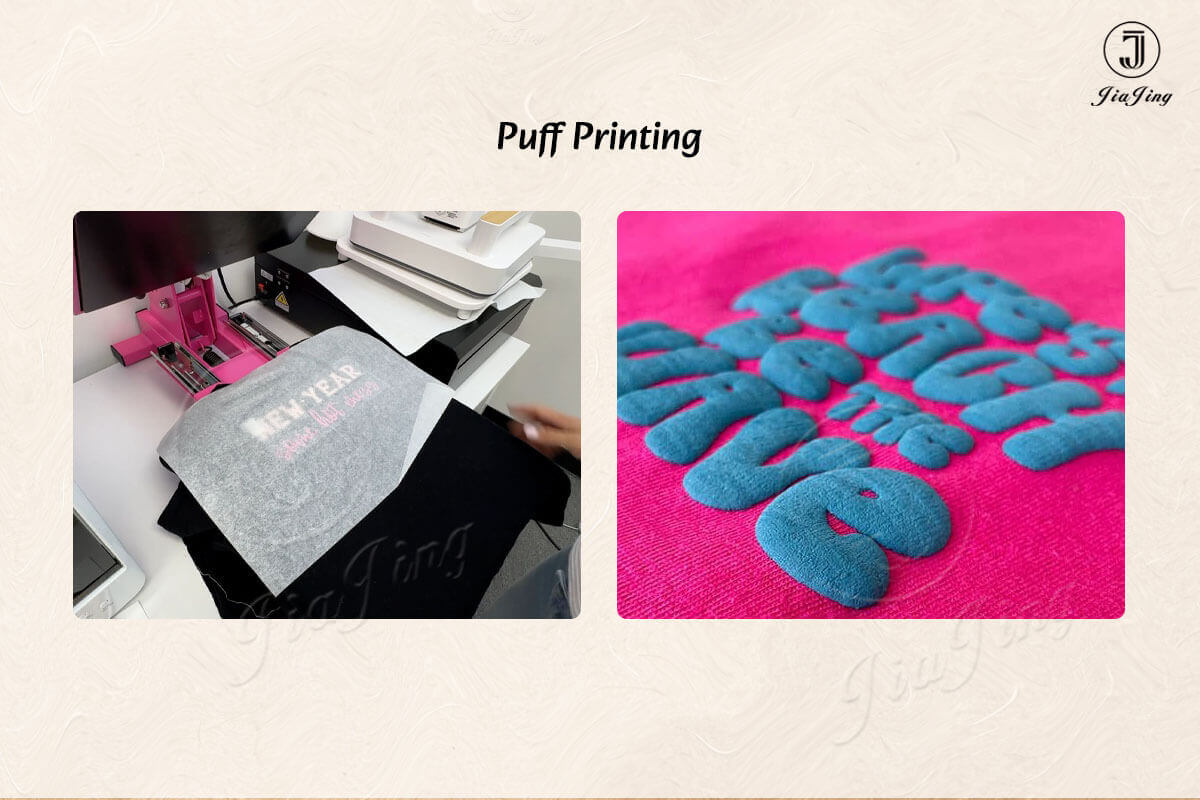
Puff printing uses a special additive that expands during curing, creating a raised three-dimensional effect.
The technique has become increasingly popular among streetwear and premium fashion brands because it adds visual depth while maintaining relatively low production complexity.
Discharge Printing

Discharge printing removes existing dye from dark garments and replaces it with new pigments.
The result is an exceptionally soft print feel due to minimal ink buildup on the fabric surface.
Many premium cotton apparel brands prefer discharge printing for vintage-inspired collections.
Plastisol Printing

Plastisol remains one of the most widely used screen printing ink systems worldwide.
It offers excellent opacity, strong durability, and vibrant colors across a wide range of garments.
Many retail-quality screen prints for t-shirts rely on plastisol inks because they provide consistent results across large production runs.
Choosing between these specialty methods depends on the desired aesthetic, target retail price, and fabric selection.
Learn More About Custom Printing Services
Which Shirt Printing Method Lasts the Longest?
Durability is one of the most important factors when selecting a shirt printing method. While almost every modern printing technology can produce attractive results, not all methods perform equally after repeated washing, stretching, and daily wear.
The most durable option depends on both the printing method and the garment fabric. A high-quality print applied to an unsuitable fabric can still fail prematurely.
| Printing Method | Durability Level | Wash Resistance | Crack Resistance | Recommended Use |
| Sublimation | Excellent | Excellent | Excellent | Sportswear |
| Screen Printing | Excellent | Excellent | Very Good | Fashion & Retail |
| DTF Printing | High | Very Good | Very Good | Custom Apparel |
| DTG Printing | Medium-High | Good | Good | Complex Color Design |
| Heat Transfer | Medium | Moderate | Moderate | Short-Term Use |
For most cotton apparel brands, screen printing remains the benchmark for long-term durability. For polyester sportswear, sublimation is often considered the most durable solution because the design becomes part of the fabric itself rather than sitting on the surface.
Cost Comparison of Different Shirt Printing Methods
Printing costs vary depending on artwork complexity, print size, garment type, fabric composition, and production quantity.
Many buyers focus only on unit price, but total production cost often depends more heavily on setup requirements and reorder frequency.
| Method | Setup Cost | Cost Efficiency | Scalability |
| Screen Printing | Higher | Excellent | Excellent |
| DTF Printing | Low | Good | Good |
| DTG Printing | Low | Moderate | Limited |
| Heat Transfer | Very Low | Moderate | Limited |
| Sublimation | Moderate | Good | Good |
Manufacturing Insight
During bulk manufacturing, setup costs should be viewed as an investment rather than an expense. Many startup brands initially opt for low-setup methods because they seem cheaper. However, if the design proves successful and requires repeated production runs, methods such as screen printing often yield lower overall costs.
When evaluating printing expenses, buyers should consider:
- Initial order quantity
- Expected reorder frequency
- Number of artwork colors
- Fabric composition
- Target retail pricing
- Future product expansion plans
Looking at printing costs through a long-term business perspective often produces better sourcing decisions.
How to Choose the Best Shirt Printing Method
There is no universal best shirt printing method. The right choice depends on your specific production requirements.
Instead of asking "Which method is best?", buyers should ask:
- What type of fabric am I using?
- How many garments am I ordering?
- How complex is my artwork?
- How important is durability?
- Will this design be reordered?
Choose Screen Printing If
- You are producing 100+ units
- You need strong durability
- You want lower long-term costs
- Your design has limited colors
Choose DTF Printing If
- You need low MOQ production
- You have multiple design variations
- You want flexibility during development
- You need fast sampling
Choose DTG Printing If
- Your artwork contains photographs
- You require unlimited colors
- You are producing samples or small runs
Choose Sublimation If
- You are manufacturing sportswear
- You need all-over prints
- Your garments are polyester-based
- You require maximum durability
Decision Framework for Apparel Brands
For startup brands, DTF often serves as the best validation-stage solution. Once sales volumes become predictable, transitioning to screen printing can improve margins and production efficiency.
For sportswear brands, sublimation should usually be evaluated before any other printing technology because of its performance advantages on polyester fabrics.
Buyer Checklist Before Placing a Shirt Printing Order
Before requesting a quote from a manufacturer, review the following checklist:
- Have you finalized your artwork files?
- Do you know your expected order quantity?
- Have you selected the garment fabric composition?
- Do you require specialty effects?
- Have you requested physical samples?
- Do you understand lead time requirements?
- Will you likely reorder this design?
- Have you established quality standards?
Completing this checklist before supplier discussions can significantly reduce sampling revisions and production delays.
FAQ About Types of Shirt Printing
Final Thoughts
Understanding the different printing methods for shirts is essential for making informed sourcing decisions. Each technology offers unique advantages, and the right choice depends on your product category, order volume, fabric selection, and long-term business goals.
For most apparel brands, the decision is not simply about finding the newest technology. It is about selecting the printing process that delivers the best balance of quality, durability, scalability, and profitability.
Whether you are launching a startup clothing brand, expanding an established collection, or developing custom uniforms, evaluating printing methods from both a manufacturing and business perspective will help you achieve better results.
Types of Embroidery: A Complete Guide to Embroidery Techniques for Custom Clothing
5 Printing Processes for Custom Hawaiian Shirts


Launch Your Precision Manufacturing Project