
Sublimation vs Screen Printing: Which Is Better for Apparel?
Key Takeaways
- Sublimation works best on polyester fabrics and creates a soft, integrated print that does not sit on the surface.
- Screen printing supports a wider range of fabrics and is commonly used for cotton apparel, hoodies, and bulk production.
- Sublimation is usually preferred for all-over prints, gradients, and highly detailed artwork.
- Screen printing often provides better cost efficiency when producing large quantities with repeated designs.
- The best printing method depends on fabric type, artwork requirements, order volume, and brand positioning.
Table of Contents
Introduction
Choosing the right printing method is an important decision for clothing brands because decoration affects not only the appearance of a garment but also production cost, minimum order requirements, fabric selection, and customer experience.
When comparing sublimation vs screen printing, many buyers focus only on print quality. However, professional apparel production requires looking at the complete picture: the garment material, artwork design, order quantity, production efficiency, and future reorder plans.
For startup brands and growing fashion companies, selecting the wrong printing method can create unnecessary costs or limit product possibilities. Understanding the differences between sublimation and screen printing helps buyers choose a solution that matches their specific apparel project.
Sublimation vs Screen Printing Comparison Table
|
Factor |
Sublimation Printing |
Screen Printing |
|
Printing Method |
Transfers dye into polyester fibers using heat |
Applies ink onto fabric through prepared screens |
|
Best Fabric |
Polyester and polyester blends with high polyester content |
Cotton, polyester, blends, fleece, and many other fabrics |
|
Print Feel |
Very soft because the ink becomes part of the fabric |
Depends on ink type; can have a raised or textured feel |
|
Artwork Detail |
Excellent for gradients, photos, and complex designs |
Excellent for bold graphics and controlled color layers |
|
Color Capability |
Unlimited colors and detailed images |
Multiple colors possible but may require separate screens |
|
Small Orders |
Suitable because setup requirements are lower |
Possible, but setup costs may affect unit cost |
|
Large Production Runs |
Suitable for polyester products and repeat designs |
Highly efficient for large-volume production |
|
Common Applications |
Sportswear, activewear, custom jerseys, all-over print apparel |
T-shirts, hoodies, uniforms, streetwear, promotional apparel |
What Is Sublimation Printing?

Sublimation printing is a decoration method that uses heat to transfer dye into synthetic fabric fibers. During production, the design is first printed onto transfer paper using special sublimation inks. Heat and pressure then transform the solid dye into a gas that bonds with polyester fibers.
Unlike traditional surface printing methods, sublimation does not add a thick ink layer to the garment. The final design becomes part of the fabric structure, creating a lightweight print with a smooth hand feel.
From a manufacturing perspective, sublimation works best when the garment itself is designed around polyester-based materials. This is why the method is widely used for sportswear, performance apparel, cycling jerseys, and custom activewear.
However, sublimation has limitations. It generally requires polyester or high-polyester fabrics and is not suitable for most 100% cotton garments, as natural fibers do not bond effectively with sublimation dyes.
Brands comparing different printing technologies may also review types of shirt printing to understand available decoration options.
What Is Screen Printing?

Screen printing is a traditional apparel decoration method where ink is pushed through a prepared mesh screen onto the garment surface. Each color in the design typically requires a separate screen, which means production preparation becomes an important factor.
Because screen printing works with many different ink types, it can be applied to a wide variety of fabrics, including cotton, polyester, cotton blends, fleece, and many common apparel materials.
In commercial clothing manufacturing, screen printing remains popular because it offers strong production efficiency for larger orders. Once the screens are prepared, manufacturers can print a high volume of garments consistently.
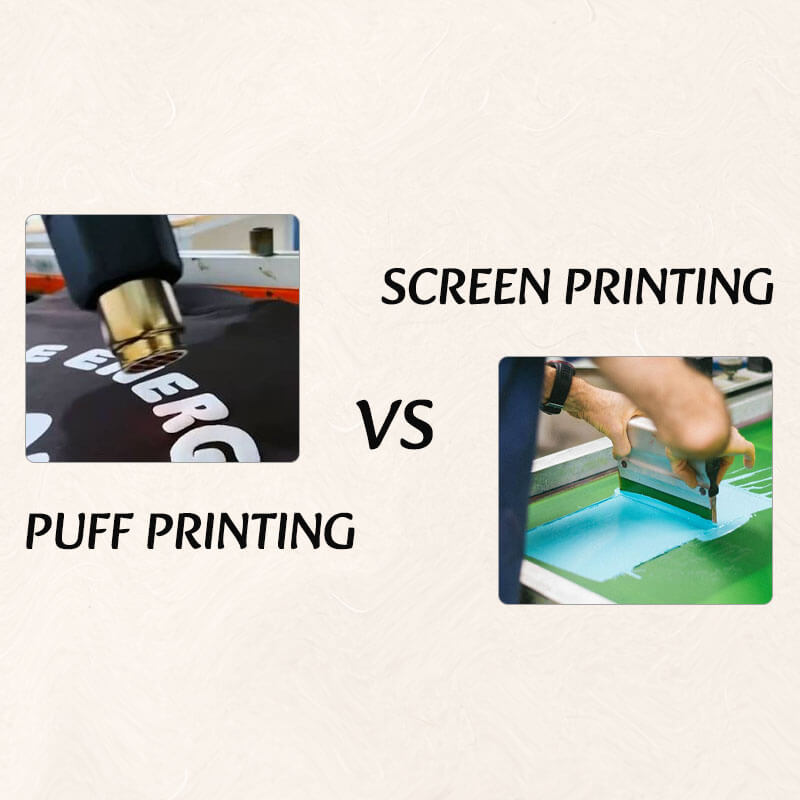
Screen printing also provides different finishing options, including specialty effects such as puff printing, metallic finishes, and textured inks, allowing brands to create distinctive product designs.
Which Costs Less?
The lower-cost option depends mainly on order quantity, artwork requirements, and garment specifications. Neither sublimation nor screen printing is always cheaper in every production scenario.
Sublimation can be cost-effective for smaller quantities because it does not require traditional screen preparation. This makes it practical for brands testing multiple designs or producing customized polyester products.
Screen printing usually becomes more economical as order volume increases. Although the preparation process requires more setup, the production efficiency improves significantly when the same design is printed across hundreds or thousands of garments.
For buyers planning production, the key cost factors include:
- Number of garments required
- Number of print colors
- Artwork complexity
- Fabric type
- Whether the design will be reordered
Buyer Tip: Do not select a printing method based only on the lowest initial price. A method with a higher setup cost may provide better value when production volume increases.
Which Lasts Longer?
Both sublimation and screen printing can provide excellent durability when the correct materials and production processes are used. The difference is not simply about which method lasts longer, but how each method interacts with the garment fabric.
Sublimation typically has excellent durability on polyester fabrics because the dye becomes integrated into the fibers. Since there is no separate ink layer on the surface, the print is less likely to crack, peel, or create noticeable texture changes during wear and washing.
Screen printing durability depends on factors such as ink quality, curing temperature, fabric type, and production control. Properly cured screen printing can maintain strong color performance through repeated washing, which is why it remains widely used for commercial apparel production.
From a manufacturing perspective, durability testing should consider the complete garment system rather than the printing method alone. Fabric quality, washing conditions, garment construction, and print location all influence final performance.
|
Durability Factor |
Sublimation |
Screen Printing |
|
Surface Feel After Washing |
Maintains original fabric feel |
Depends on ink type and application |
|
Cracking Risk |
Very low on suitable polyester fabrics |
Low when properly cured |
|
Color Performance |
Excellent on polyester |
Strong across many garment types |
|
Fabric Limitation |
Requires compatible synthetic fabrics |
Works with more fabric options |
Which Works on More Fabrics?
Screen printing is generally more flexible when it comes to fabric compatibility. It can be applied to many common apparel materials, including cotton, polyester blends, fleece, denim, and uniforms.
Sublimation has a narrower fabric requirement because the dye bonding process depends on polyester fibers. For this reason, sublimation is commonly selected for performance fabrics and polyester-based sportswear rather than traditional cotton basics.
Fabric selection should be considered before choosing the printing method. In commercial apparel production, the garment material often determines which decoration techniques are technically suitable.
Fabric Compatibility Comparison
|
Fabric Type |
Recommended Method |
Manufacturing Consideration |
|
100% Cotton |
Screen Printing |
Provides reliable results for T-shirts, hoodies, and casual apparel |
|
Polyester |
Sublimation or Screen Printing |
Choice depends on design requirements and garment purpose |
|
Sportswear Fabric |
Sublimation |
Suitable for lightweight performance garments and all-over designs |
|
Fleece / Hoodies |
Screen Printing |
Better compatibility with thicker cotton and blended fabrics |
Which Is Better for Complex Artwork?
Sublimation generally has an advantage when designs contain many colors, gradients, photographs, or detailed patterns. Because the artwork is digitally transferred into the fabric, it can reproduce complex images without creating additional screen setups.
Screen printing is highly effective for bold graphics, logos, and designs with controlled color separation. However, each additional color may require additional preparation, which can affect production cost and efficiency.
For apparel brands, the artwork itself should influence the printing decision.
- Photo-realistic designs and full-color patterns often fit sublimation better.
- Simple logos and bold graphics often work well with screen printing.
- Large repeat orders with the same artwork often benefit from screen printing efficiency.
Manufacturer Insight: During sample development, reviewing artwork before production helps determine whether the design is better suited for digital transfer methods or traditional screen preparation.
Choosing Between Sublimation and Screen Printing for Different Apparel Projects
For clothing brands, the best printing method depends on more than technical specifications. The garment category, artwork style, order quantity, and brand positioning all influence the final production decision.
Hoodies and Sweatshirts
Screen printing is usually the more practical choice for hoodies and sweatshirts because these garments are commonly made from cotton or fleece materials. The thicker fabric structure also supports specialty printing effects and larger graphics.
Sublimation is generally less common for traditional hoodies unless the garment is made from polyester or designed specifically for sublimation printing.
T-Shirts
Both methods can work for T-shirts, but the fabric composition is the deciding factor. Cotton T-shirts commonly use screen printing, while polyester performance shirts may benefit from sublimation.
Sportswear and Activewear
Sublimation is widely used for sportswear because polyester performance fabrics allow the dye to bond effectively. It is especially suitable for team uniforms, jerseys, and all-over printed activewear.
Logo Placement and Branding
For small brand logos, both methods can be considered depending on the garment and fabric. For large back graphics or full garment patterns, sublimation may provide more design flexibility, while screen printing remains efficient for repeated branded apparel programs.
Which Is Better for Small Orders?
For small-batch production, sublimation often provides flexibility because it requires less traditional setup. This makes it useful for startup brands that want to test different designs before larger production commitments.
Screen printing can also support small orders, but preparation requirements may influence the overall cost depending on the artwork and number of colors.
For brands producing limited collections, the best choice depends on whether the priority is design flexibility, fabric selection, or future scaling plans.
Which Is Better for Bulk Production?
For bulk production, screen printing is often preferred when the same design is produced repeatedly across a large quantity of garments. Once setup is complete, the process becomes highly efficient.
Sublimation can also support bulk production, especially for polyester-based products such as sports uniforms and performance apparel. The right choice depends on the garment category rather than order quantity alone.
Decision Matrix: Sublimation vs Screen Printing
|
Your Project Requirement |
Recommended Option |
Reason |
|
All-over polyester design |
Sublimation |
Provides full coverage and detailed color reproduction |
|
Cotton T-shirts or hoodies |
Screen Printing |
Better fabric compatibility |
|
Photo-style artwork |
Sublimation |
Handles complex images and gradients effectively |
|
Large quantities with repeated logos |
Screen Printing |
Production efficiency improves with volume |
|
Startup brand testing multiple designs |
Sublimation |
Flexible for design variation on suitable fabrics |
|
Premium textured effects |
Screen Printing |
Supports specialty inks and surface effects |
Manufacturer Perspective: How We Evaluate Printing Methods
From a manufacturing perspective, choosing between sublimation and screen printing starts before the printing stage. The evaluation usually begins with the garment design, fabric composition, artwork requirements, and expected production quantity.
During sampling, manufacturers review whether the selected decoration method matches the garment structure. Important factors include print appearance, fabric behavior, production efficiency, and repeatability for future orders.
For brands planning long-term collections, the best printing choice should support both the first production run and future reorders. A decoration method that works well for one sample may not always be the most efficient solution for larger-scale production.
Common Buyer Mistakes When Choosing a Printing Method
- Choosing based only on price: The cheapest initial option may not provide the best value after considering fabric limitations, setup costs, and future orders.
- Ignoring fabric compatibility: A printing method should match the garment material before production begins.
- Focusing only on sample appearance: Brands should also consider production consistency and reorder requirements.
- Not discussing artwork details early: Design complexity can significantly influence the recommended printing method.
Final Recommendation
Sublimation and screen printing are both effective apparel decoration methods, but they serve different production purposes. Sublimation is usually the better choice for polyester garments, all-over designs, and highly detailed artwork. Screen printing is often the better option for cotton apparel, versatile garment categories, and efficient large-volume production.
The right decision depends on your fabric, artwork, order quantity, and brand goals. If you are planning a custom apparel project, reviewing these factors with an experienced manufacturer can help you select the most suitable printing solution.
FAQ
Plastisol vs Water-Based Ink: Which Is Better for Apparel Printing?
Screen Printing vs Heat Transfer: Which Method Is Right for Your Apparel Project?


Launch Your Precision Manufacturing Project