
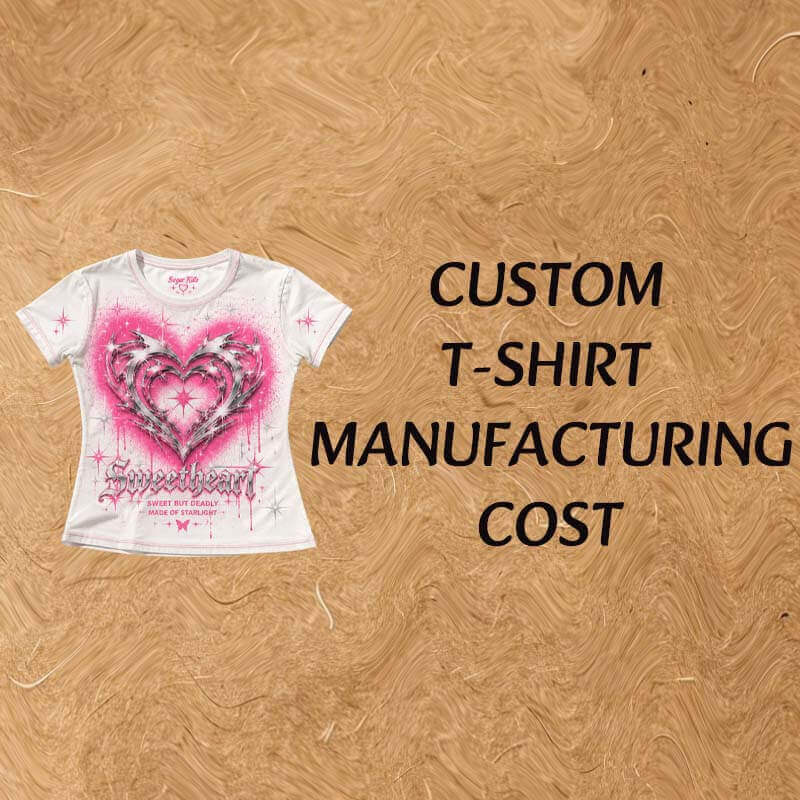
How Much Does It Cost to Make a Custom T-Shirt? A Startup Brand Guide
Introduction
The market for custom T-shirts is growing rapidly; analysts project a compound annual growth rate (CAGR) of 11.5% for the global custom T-shirt printing market between 2025 and 2030. Driven by rising consumer demand for personalized apparel, many clothing startups are choosing T-shirts as one of their core products. For many startup clothing brands, one of the first questions that comes up is simple:
How much does it actually cost to make a custom T-shirt?
In most cases, custom T-shirt manufacturing costs range from approximately $7 to $30 per piece, depending on fabric quality, printing method, order quantity, customization level, and shipping requirements.
A basic promotional T-shirt may cost between $5 and $7 per piece. In contrast, a premium retail-ready garment with heavyweight fabric, embroidery, custom labels, and branded packaging can cost $18 to $35 or more.
Understanding where those costs come from helps you make smarter sourcing decisions, avoid unnecessary expenses, and launch products that align with both your budget and brand positioning.
| Product Type | Typical Manufacturing Cost |
| Basic Promotional T-Shirt | $5–7 |
| Standard Retail T-Shirt | $7–18 |
| Premium Heavyweight T-Shirt | $18–35+ |
- The major factors that affect custom T-shirt manufacturing costs
- How fabric, printing, trims, and MOQ influence pricing
- Hidden expenses that many startup brands overlook
- How production location impacts lead time and cost
- Practical ways to reduce costs without sacrificing quality
- How to make better sourcing decisions as a startup clothing brand
Major Factors That Affect Custom T-Shirt Costs
1. Fabric Composition and GSM
Fabric is usually the largest cost component in a custom T-shirt. It directly affects manufacturing cost, comfort, durability, print quality, garment appearance, and customer perception.
When comparing supplier quotations, fabric selection is often the first area where meaningful price differences appear.

100% Cotton
100% cotton T-shirt100% cotton T-shirt remains the preferred choice for most fashion, lifestyle, and retail brands. It offers excellent breathability, softness, moisture absorption, and compatibility with most printing methods.
Premium options such as combed cotton, ring-spun cotton, organic cotton, and long-staple cotton provide improved hand feel and durability, but they also increase material costs.
Cotton-Poly Blends
Cotton-polyester blends T-shirts combine the comfort of cotton with the durability and wrinkle resistance of polyester. They are commonly used for uniforms, promotional apparel, and brands seeking a balance between quality and cost.
Performance Fabrics
Performance fabrics are widely used in sportswear and activewear. Features may include moisture-wicking, quick-dry performance, UV protection, and antimicrobial properties.
These technical fabrics generally cost more than standard cotton fabrics due to specialized yarns and finishing processes.
Understanding GSM
GSM (grams per square meter) refers to fabric weight and is one of the most important indicators of a T-shirt's feel and quality.
| GSM Range | Typical Application |
| 160–180 GSM | Lightweight promotional T-shirts |
| 190–220 GSM | Standard retail-quality T-shirts |
| 240–280 GSM | Premium heavyweight styles |
| 300+ GSM | Luxury and fashion-focused collections |
2. Printing and Decoration Methods
Printing and decoration methods can significantly affect production costs, especially when artwork complexity and order quantity vary.

Screen Printing
Screen printing remains one of the most cost-effective decoration methods for medium and large production runs. Although screen setup creates an upfront cost, the unit cost decreases substantially as the order quantity increases.
It delivers vibrant colors, excellent durability, and consistent results across large batches. For large-batch custom screen-printed T-shirts, the cost ranges from $7 to $13 per shirt.
DTG Printing
Direct-to-Garment (DTG) printing is ideal for highly detailed artwork, gradients, and photographic designs.
Because no screen setup is required, DTG is often preferred for small-batch production, startup brands, sampling, and print-on-demand applications.
Embroidery
Embroidery provides a premium look and is commonly used for chest logos, sleeve branding, caps, and premium collections.
Costs are usually determined by stitch count, logo size, and design complexity.
Additional decoration methods such as puff printing, reflective printing, silicone printing, appliqué, woven patches, and specialty inks may further increase production costs.
Learn more about different types of T-shirt printing and embroidery.
3. Labels, Trims, and Packaging
Many startup brands focus heavily on fabric and printing while underestimating the impact of trims and packaging.
Common customization options include:
- Main labels
- Care labels
- Size labels
- Woven labels
- Hang tags
- Stickers
- Custom poly bags
- Branded packaging
Individually, these items may appear inexpensive. However, when combined across an entire production run, they can noticeably increase total manufacturing costs.
At the same time, they contribute significantly to perceived brand value and customer experience.
4. Premium Finishes and Special Treatments
Premium finishes are often used to differentiate products in increasingly competitive apparel markets.
Popular options include:
- Garment washing
- Vintage wash T-shirts
- Acid-wash T-shirts
- Silicone softening finishes
- Anti-shrink treatments
- Neck tape reinforcement
- Applique decorations
- Studs and embellishments
These enhancements improve product uniqueness and perceived quality, but they also increase labor, material, and production costs.
Brands should evaluate whether these upgrades align with their target market and pricing strategy.
Learn more about different types of Clothing Patches.
5. Order Quantity and MOQ
Order quantity is one of the most influential variables in apparel manufacturing.
Many production costs are fixed regardless of order size. As quantity increases, those fixed costs are spread across more garments, reducing the average cost per unit.
| Order Quantity | Typical Cost Per Piece |
| 50+ pcs | $15–30 |
| 100+ pcs | $7–13 |
| 1000+ pcs | $3–12 |
Most custom T-shirt manufacturers require minimum order quantities ranging from 50 to 300 pieces, depending on the level of customization involved.
6. Production Timeline
Lead time can affect both project planning and overall costs.
| Production Stage | Typical Lead Time |
| Sampling | 7–15 Days |
| Bulk Production | 25–30 Days |
| Shipping | 5–35 Days |
Planning production several months before launch helps reduce rush fees and avoid costly delays.
7. Production Location
Production location can affect both manufacturing costs and lead times.
Many brands source from China, Vietnam, Turkey, or domestic suppliers, depending on their priorities for pricing, production capacity, quality control, and logistics.
For a detailed comparison, see our China vs. Vietnam Apparel Manufacturing Guide.
Hidden Costs Startup Brands Often Overlook
8. Sampling Costs
Sampling is a critical step in apparel product development.
Before approving bulk production, brands should evaluate:
- Fabric quality
- Garment fit
- Printing quality
- Construction details
- Overall appearance
Changes to sizing, artwork placement, colors, trims, or garment construction may require additional sample rounds, increasing development costs.
9. Shipping Costs
Shipping expenses depend on multiple factors, including destination country, order volume, carton dimensions, transportation method, and fuel prices.
Brands sourcing overseas often benefit from lower manufacturing costs but should carefully account for freight expenses when calculating total landed costs. Many apparel brands allocate approximately 5%–15% of their total production budget to logistics.
10. Duties and Taxes
Import duties, customs fees, and various taxes vary by country and product category. While these costs are beyond the manufacturer's control, brands must factor them into their overall cost estimates.
Failing to account for duties and taxes during product costing can lead to a significant reduction in profit margins once the product reaches the target market.
Typical Custom T-Shirt Cost Breakdown
Although every project is different, custom T-shirt manufacturing costs are often distributed across the following categories:
| Cost Component | Typical Share |
| Fabric | 30–50% |
| Printing / Decoration | 15–35% |
| Labor & Sewing | 10–20% |
| Labels & Packaging | 2–8% |
| Shipping & Logistics | 5–15% |
Cost Reduction Tips
Keep Designs Simple
By limiting print colors and avoiding unnecessary embellishments, a minimalist design can significantly reduce the cost of custom T-shirt printing while maintaining a distinctive brand image.
Choose Classic Stock Fabrics
Classic T-shirt fabrics have stood the test of the market and earned consumer approval. Most manufacturers stock these classic fabrics, which helps reduce development costs and shorten lead times, as they are ready for immediate production.
Optimize Print Placement and Size
Additional print locations generally increase costs. In many cases, a front logo and one supporting graphic are sufficient.
Increase Order Quantity
If projected sales from the test are strong, increasing order volume can lower costs and maximize production efficiency. The cost of mass-customizing T-shirts is 30%–50% lower than that of customizing individual T-shirts.
Plan Production Earlier
Launching production three to four months before a product release provides sufficient time for sampling, quality control, and shipping. This avoids additional costs associated with expedited processing.
Work With a Reliable Manufacturing Partner
A reliable manufacturer can help optimize fabric selection, printing methods, production planning, and overall cost control.
Frequently Asked Questions
How much does a custom T-shirt cost?
Most custom T-shirts cost between $7 and $35 per piece, depending on fabric quality, garment weight, printing method, order quantity, and customization requirements.
What is your MOQ for custom T-shirts?
Most custom T-shirt projects require a minimum order quantity of 50–300 pieces, depending on the level of customization involved.
How long does custom T-shirt production take?
- Sampling: 7–15 days
- Bulk Production: 25–30 days
- Shipping: 5–35 days
What GSM is best for T-shirts?
For most retail brands, 210–220 GSM combed cotton offers the best balance of comfort, durability, and value.
Is cotton better than polyester?
The better choice depends on the intended use. Cotton excels in comfort and everyday wear, while polyester performs better in activewear and moisture-management applications.
Which printing method should I choose?
- Screen Printing: Best for large orders
- DTG Printing: Ideal for small batches and detailed artwork
- Embroidery: Premium branding option for logos and chest graphics
Ready to Start Your Custom T-Shirt Project?
Whether you're launching a startup clothing brand, building a private-label collection, or sourcing promotional apparel, understanding the factors behind custom T-shirt costs will help you make better production decisions.
An experienced custom T-shirt manufacturing partner can often reduce overall project costs by recommending the right fabric, printing method, and production plan from the beginning.
Contact us today for a quotation, fabric recommendation, and production consultation tailored to your brand's goals.
Custom Hoodie Cost: A Guide for Startup Brands



Launch Your Precision Manufacturing Project